

A strong grip is more than just a sign of power — it’s a foundation for better performance in lifting, sports, and daily activities. Whether you’re looking to boost your deadlift, improve pull-ups, or enhance hand endurance, developing grip strength can make a big difference.
Here’s everything you need to know about how to improve your grip strength, including practical exercises you can do at home or in the gym.
Why Grip Strength Matters
Grip strength affects almost every movement involving your hands and forearms. Stronger grip means:
- Better performance in weightlifting, climbing, and sports
- Improved endurance during pull-ups and rows
- Reduced risk of injury to your wrists and elbows
- Better daily function, from opening jars to carrying groceries
Research even shows that grip strength is linked to overall muscle health and longevity, making it a key indicator of physical fitness.
Types of Grip Strength
To train effectively, understand the three main types of grip:
- Crush Grip – The squeezing power of your hand (e.g., handshake, gripping a barbell).
- Pinch Grip – The ability to hold something between your fingers and thumb (e.g., plate pinch).
- Support Grip – The endurance to hold a weight for an extended time (e.g., farmer’s carry).
Balanced training across these types builds stronger, more functional hands and forearms.
Best Exercises to Improve Grip Strength
1. Farmer’s Carry
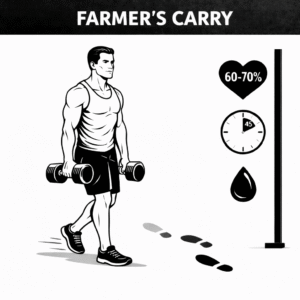
How to do it:
Hold heavy dumbbells or kettlebells at your sides and walk for 30–60 seconds. Keep your shoulders back and core tight.
Benefits: Builds support grip, forearm endurance, and full-body stability.
2. Dead Hangs
How to do it:
Hang from a pull-up bar with both hands for as long as possible. Keep your shoulders active and avoid shrugging.
Benefits: Enhances grip endurance and prepares you for pull-ups.
3. Plate Pinches
How to do it:
Grab two weight plates (smooth sides out) between your thumb and fingers. Hold them for 30–45 seconds per set.
Benefits: Improves pinch grip and thumb strength.
4. Towel Pull-Ups
How to do it:
Drape two towels over a pull-up bar, grab one in each hand, and perform pull-ups.
Benefits: Challenges grip and forearms more than standard pull-ups.
5. Wrist Curls and Reverse Wrist Curls
How to do it:
Sit with your forearms resting on a bench or thighs, holding a barbell or dumbbells. Curl your wrists up and slowly lower them down.
Benefits: Strengthens forearm muscles essential for grip power.
6. Hand Grippers
How to do it:
Use a hand gripper tool and squeeze for 10–15 reps per hand.
Benefits: Builds crush grip and overall hand strength.
How to Improve Grip Strength at Home
You don’t need fancy gym equipment to get results. Try these simple at-home techniques:
- Squeeze a tennis ball for 3 sets of 20 reps.
- Use a towel twist to mimic wringing out water for wrist strength.
- Perform bodyweight holds (like dead hangs or plank variations).
Consistency is the key aim for 2–3 grip sessions per week alongside your regular workouts.
Tips to Maximize Grip Strength Training
- Train progressively: Gradually increase weight or time under tension.
- Don’t overtrain: Your forearms recover slower than larger muscles.
- Stretch and mobilize: Keep wrists and hands flexible to prevent strain.
- Combine with full-body lifts: Exercises like deadlifts, rows, and carries naturally build grip over time.
Final Thoughts
Improving your grip strength enhances both performance and practicality. From lifting heavier weights to daily functional tasks, a strong grip empowers your body in countless ways.
Start with the basic exercises above, focus on proper form, and stay consistent. Over time, you’ll notice a firmer handshake, stronger lifts, and greater overall strength.
Written By

Join thousands of readers leveling up their fitness.
Skip the guesswork—get insights on training, health, and the right gear to support your progress.
You may also like
8 Best Upper Glute Workout
If you’re aiming for a lifted, rounded booty with more shape and definition at…
7 Best Row Exercises to Build Back Strength
Want a stronger, thicker, and more defined back? Start rowing. Row exercises…
What Is the Arnold Press, Its Benefits, & How to Do It Safely
Named after bodybuilding legend Arnold Schwarzenegger, the Arnold Press is more…
How to Do Hip Thrusts the Right Way
Looking to grow stronger, rounder glutes? The hip thrust is one of the most…

How To Do Squats Properly
The squat is often called the king of exercises—and for good reason. It targets…

8 Best Shoulder Mobility Exercises
Stiff shoulders? Limited range of motion? You're not alone. Shoulder mobility…