

The squat is one of the most useful movements you can learn, whether you train in a gym, exercise at home, or simply want to move better in everyday life. You squat when you sit down, stand up, pick something up from the floor, climb stairs, and lower yourself into countless everyday positions. Learning how to squat properly therefore has benefits that extend well beyond strength training.
In the gym, squats are especially valuable because they train several major muscle groups at the same time. A well-performed squat can challenge the quadriceps, glutes, hamstrings, and core while also requiring coordination between the hips, knees, ankles, and upper body.
But knowing that squats are useful is not the same as knowing how to perform them well.
A squat can look simple from the outside, yet small changes in foot position, balance, depth, or posture can significantly change how the movement feels. Poor technique can make the exercise less effective and may place unnecessary stress on your joints. On the other hand, proper squat form allows you to move with greater control and gradually increase the demands placed on your muscles.
The good news is that you do not need to start with a heavy barbell to learn how to squat properly. The bodyweight squat provides an excellent starting point. Once you understand how to position your feet, brace your core, control the descent, and drive yourself back to standing, you can gradually introduce resistance and more challenging squat variations.
This guide walks you through the fundamentals of the squat, explains what good technique should look and feel like, covers the most common mistakes, and shows how you can progress once you have mastered the basic movement.
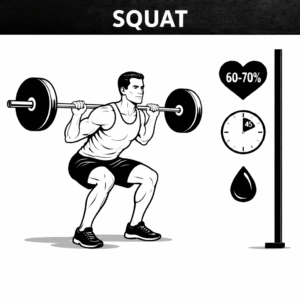
Why Proper Squat Form Matters
Squats are a compound movement, meaning several joints and muscle groups work together to complete the exercise. That makes them highly effective, but it also means that technique matters.
When your squat mechanics are sound, your hips, knees, ankles, and trunk can work together efficiently. Your muscles share the workload, your feet remain stable against the floor, and you can control both the lowering and standing phases of the movement.
Good squat technique can help you build lower-body strength while improving your ability to control your body through a deep range of motion. It can also help you become more comfortable with movements that involve bending your hips and knees, which are part of normal daily activities.
Another important point is that there is not one identical squat position that works perfectly for every person. Your ideal stance can be influenced by your anatomy, hip structure, ankle mobility, flexibility, and training experience. One person’s feet may naturally point slightly farther outward than another’s. One person may be comfortable squatting deeply while another needs to gradually develop the mobility required to reach the same position.
That means proper squat form should not be treated as a rigid checklist where every person’s body must look exactly the same. The goal is controlled, repeatable movement that suits your body and allows you to perform the exercise without unnecessary discomfort.
A well-executed squat can contribute to stronger legs and hips, better movement control, improved core stability, and greater confidence with resistance training. These benefits become even more important as you progress to loaded squats.
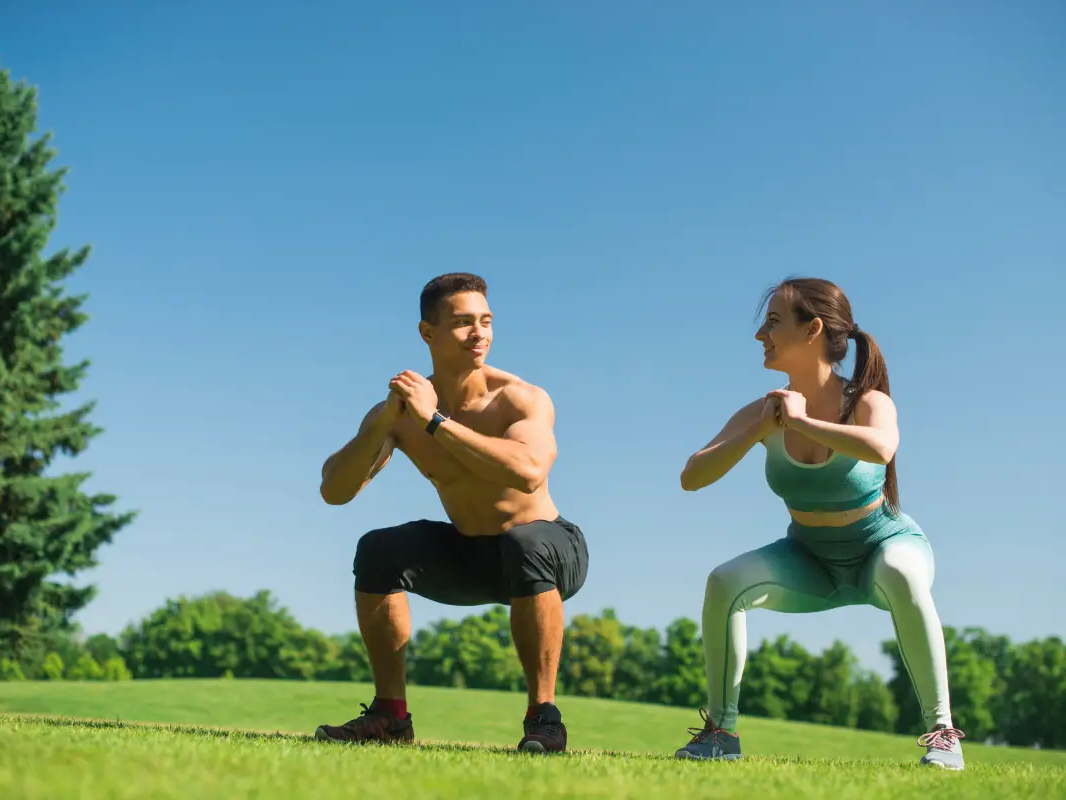
How to Do a Proper Bodyweight Squat
Before you add a barbell or heavy dumbbell, spend time learning the basic bodyweight squat. This gives you an opportunity to develop control and identify mobility limitations without having additional weight working against you.
Step 1: Find a Comfortable Stance
Begin standing with your feet approximately shoulder-width apart. Your exact stance does not have to match someone else’s. Start from a comfortable position and adjust slightly if needed.
Allow your toes to point slightly outward rather than forcing them to face perfectly forward. The original guide recommends roughly 10 to 15 degrees of outward rotation, but the most comfortable position can vary from person to person.
Your weight should be distributed across your feet rather than concentrated entirely on your heels or toes. Think about maintaining contact between your heel, the base of your big toe, and the base of your little toe.
This gives you a stable foundation before you begin moving.
Step 2: Brace Your Core
Before descending, take a controlled breath and create tension through your midsection. Your core should feel engaged without forcing your stomach inward or holding excessive tension throughout your body.
Keep your chest comfortably lifted and your spine in a natural position.
You do not need to exaggerate the position by pushing your chest aggressively upward. Instead, think about keeping your torso controlled while allowing your hips and knees to move naturally.
A stable trunk gives your lower body a solid platform from which to produce force.
Step 3: Begin the Descent
Start the movement by bending your hips and knees at the same time. Rather than simply pushing your hips backward as if you are sitting in a chair, allow your knees to move forward naturally while your hips move downward.
This is an important distinction.
The squat is not a movement where your knees must stay behind your toes at all costs. Depending on your body proportions and squat style, your knees may travel forward over your toes. What matters is that your feet remain stable and your knees track in a controlled direction.
As you descend, keep your feet firmly connected to the floor.
Step 4: Lower Under Control
Continue lowering yourself until you reach a depth that you can control while maintaining good technique.
For many people, reaching approximately thigh-parallel depth is a useful starting goal. However, squat depth should not be treated as a competition. Your available range of motion depends on your mobility, body structure, experience, and the type of squat you are performing.
If you can comfortably squat deeper while maintaining control, there is no need to stop at parallel. If you currently struggle to reach that depth without your heels lifting or your lower back losing position, work within your current range and gradually improve it.
The descent should be controlled rather than dropped quickly.
Your knees should generally track in the same direction as your toes. Avoid allowing them to collapse dramatically inward as you descend.
Step 5: Drive Back to Standing
Once you reach the bottom of your comfortable range, begin driving yourself upward.
Push firmly through your feet while extending your knees and hips. Your torso should rise in a coordinated manner rather than folding forward or shifting dramatically from side to side.
Continue driving upward until you return to a standing position.
At the top, stand tall and regain your starting position. You can contract your glutes naturally, but there is no need to aggressively squeeze them or push your hips forward.
For beginners, starting with two to three sets of 10 to 15 controlled repetitions can provide enough practice to develop the basic movement.
The priority should be technique and consistency rather than simply completing as many repetitions as possible.
How to Progress Your Squats
Once you can perform bodyweight squats confidently, you can gradually introduce resistance and more demanding variations.
The goal of progression is not simply to make the exercise harder. Each variation should provide a new challenge while allowing you to maintain good movement quality.
Goblet Squat
The goblet squat is an excellent next step after mastering the bodyweight squat.
Hold a dumbbell or kettlebell close to your chest with both hands. The weight provides additional resistance while also encouraging you to maintain an upright torso.
Because the load is positioned in front of your body, many beginners find the goblet squat easier to understand than a barbell squat. It also provides a useful way to build lower-body strength while continuing to practice proper squat mechanics.
Start with a manageable weight and focus on controlling the entire range of motion.
Front Squat
The front squat places a barbell across the front of your shoulders rather than behind your neck. This position generally requires greater upper-body and core control and can place substantial demand on the quadriceps.
Learning how to front squat should come after you have developed a reliable foundation with simpler squat variations.
Because the bar sits in front of the body, maintaining an upright torso becomes particularly important. If your upper back or core cannot maintain the required position, reduce the load and continue working on your technique.
Bulgarian Split Squat
The Bulgarian split squat is a single-leg exercise performed with the rear foot elevated on a bench or other stable surface.
Although it is technically a split squat rather than a traditional bilateral squat, it is an excellent addition to a lower-body training program because it challenges the legs individually.
It also requires balance and control, making it useful for identifying differences in strength between the two sides of the body.
If you are learning how to do Bulgarian split squat variations, begin with bodyweight resistance before adding dumbbells. Focus on maintaining control throughout the descent and avoiding excessive movement through the torso.
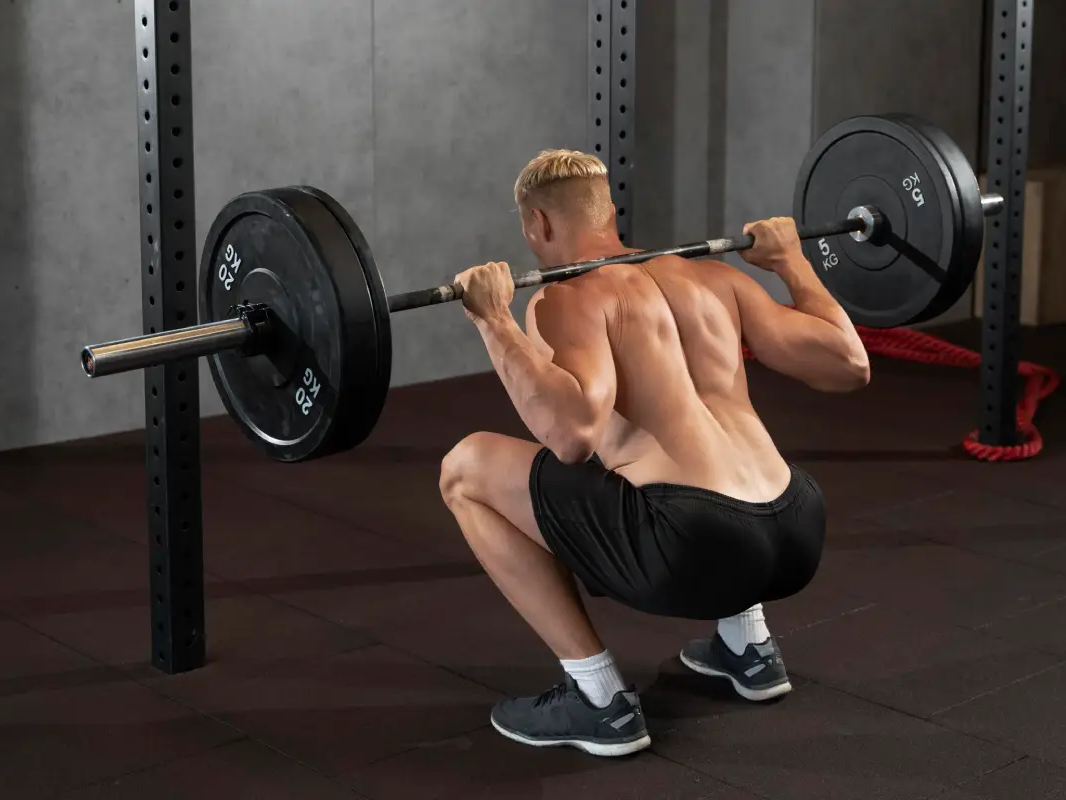
Barbell Back Squat
The barbell back squat is one of the most recognizable strength-training exercises. With the bar positioned across the upper back, you can progressively increase the load as your strength and technique improve.
However, heavier resistance also makes technical errors more significant.
Do not rush into heavy back squats simply because you can complete a few repetitions. Your ability to control the movement should determine when and how much weight you add.
A strong back squat is built through consistent practice, not through constantly testing your maximum strength.
How to Improve Your Squat Form
Improving your squat does not always require adding more weight. In many cases, better results come from paying closer attention to the fundamentals.
Begin each workout with an appropriate warm-up. Gentle hip and ankle mobility work can help prepare your joints for the positions required during squatting. Bodyweight repetitions are also useful for rehearsing the movement before adding resistance.
Recording yourself from the side and front can provide valuable feedback. A video can reveal things that are difficult to notice while you are actually performing the exercise, such as your heels lifting, your knees shifting excessively, or your torso changing position during the descent.
Your footwear can also influence how stable you feel. Stable, flat shoes are often useful for strength training because they provide a firm platform. However, footwear alone will not solve a mobility or technique problem.
Most importantly, practice consistently. Squatting is a skill as well as a strength exercise. The more opportunities you have to perform controlled repetitions, the more natural the movement becomes.
How Often Should You Squat?
The right frequency depends on your overall training program, recovery, experience, and goals.
For many people, squatting two or three times per week can provide enough practice and training stimulus without unnecessarily increasing fatigue. That does not mean every session needs to involve heavy squats.
One day might focus on a heavier strength-oriented variation, while another session could use lighter goblet squats, bodyweight work, or a single-leg variation.
Recovery matters just as much as training frequency. If your legs remain extremely fatigued between sessions or your squat performance consistently declines, your training volume may need to be adjusted.
The goal is to create a routine that allows you to improve over time rather than simply accumulate as much work as possible.
Common Squat Mistakes to Avoid
Even experienced gym-goers can develop poor squat habits, particularly when they become focused on lifting heavier weights or completing more repetitions.
Letting the Knees Collapse Inward
One common mistake is allowing the knees to move significantly inward during the squat. This can happen when the weight becomes too challenging, when fatigue sets in, or when the lifter has difficulty controlling the movement.
Instead of trying to force your knees dramatically outward, focus on keeping them aligned with the direction of your toes throughout the movement. Reduce the load or range of motion if you cannot maintain control.
Allowing the Heels to Lift
Your feet provide the foundation for the entire squat. If your heels repeatedly lift from the floor, you lose some of that stability and may compensate elsewhere in your body.
Limited ankle mobility can contribute to this problem, although stance and technique can also play a role.
Try adjusting your stance slightly and working on ankle mobility. Training in stable, flat footwear may also make it easier to maintain contact with the floor.
Rounding the Lower Back
A loss of spinal control at the bottom of a squat can occur when someone tries to reach a depth that their current mobility does not allow.
Instead of forcing yourself lower, use a range where you can maintain control. Work on the mobility limitations separately and gradually expand your squat depth as your movement improves.
Keeping your core engaged throughout the exercise can also help you maintain a more stable trunk.
Forcing Yourself to Squat Deeper
Deeper is not automatically better.
A deeper squat can be an excellent movement when you can reach that position comfortably and maintain control. But forcing depth by allowing your feet to lose stability, your torso to collapse, or your movement to become painful defeats the purpose.
Start with the deepest position you can control. Over time, improved mobility and technique may allow you to go deeper naturally.
Moving Too Quickly
A fast descent can make it difficult to control your position. It can also make it harder to recognize when your technique begins to break down.
Slow down and practice the movement deliberately. Once you have developed control, you can increase your training speed naturally without sacrificing technique.
Final Thoughts
Learning how to squat properly is not about copying one perfect-looking movement. It is about developing a squat that is controlled, stable, repeatable, and appropriate for your body.
Start with the basics. Establish a stable stance, keep your feet connected to the floor, brace your core, allow your hips and knees to work together, and control the descent. From there, practice standing up with the same level of control.
Once the bodyweight squat feels natural, you can begin exploring variations such as the goblet squat, front squat, Bulgarian split squat, and eventually the barbell back squat. Each variation offers a different challenge, but none of them should replace the fundamentals.
Do not feel pressured to add weight before your movement is ready. Strength will come with consistent training. Your technique should be developed first so that additional resistance becomes a progression rather than a compensation for poor mechanics.
Squats are valuable because they train more than your legs. They teach you how to control your body, produce force through the lower body, maintain stability under resistance, and move efficiently through a fundamental human movement pattern.
Take the time to learn the movement properly, pay attention to how your body responds, and make gradual improvements rather than chasing heavier numbers too soon. With consistent practice and sensible progression, a well-executed squat can become one of the most useful exercises in your training routine.
Last Updated on August 27, 2026
Written By

Join thousands of readers leveling up their fitness.
Skip the guesswork—get insights on training, health, and the right gear to support your progress.
You may also like
How To Do A Lat Pulldown Correctly
The lat pulldown is one of the best exercises for building a wider, stronger…
10 Different Types Of Deadlifts And Their Benefits
The deadlift is one of the most powerful compound exercises for building…
How to Strengthen Your Knees for Running
Strong, healthy knees are essential for runners, whether you’re logging miles…
Compound vs. Isolation Exercises: What’s the Difference?
When it comes to strength training, all exercises can generally be divided into…
Back Squat Exercise Guide: How to Master Back Squats
The back squat is one of the most effective strength training exercises for…
10 Medicine Ball Ab Exercises You Need To Try
If you’re tired of traditional crunches and planks, it’s time to add some…