

The back squat is one of the most effective strength training exercises for building lower-body power, stability, and muscle mass. Whether you’re an athlete, powerlifter, or beginner in the gym, learning how to perform the back squat correctly is essential for developing strength safely and efficiently.
What Is a Back Squat?
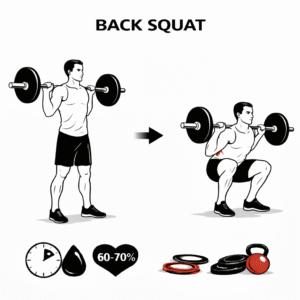
A back squat is a compound exercise where a loaded barbell is placed across your upper back and shoulders while you bend your knees and hips to lower your body, then return to a standing position.
It primarily targets your quadriceps, glutes, hamstrings, and lower back, making it one of the most complete lower-body exercises available.
Key Muscles Worked:
- Quadriceps (front of thighs)
- Hamstrings (back of thighs)
- Gluteus maximus (hips and buttocks)
- Erector spinae (lower back)
- Core and stabilizing muscles
Why You Should Do Back Squats
Back squats are not just about building bigger legs; they enhance functional strength, improve posture, and boost athletic performance.
Benefits include:
- Increased lower-body strength and muscle growth
- Improved balance and stability
- Better posture and spinal alignment
- Enhanced mobility and flexibility
- Boosted calorie burn and overall fitness
How to Perform a Back Squat (Step-by-Step)
1. Set Up
- Position a barbell on a squat rack at shoulder height.
- Step under the bar and place it across your upper traps or rear deltoids (depending on squat style).
- Grip the bar slightly wider than shoulder-width and pull your elbows down and back.
- Lift the bar off the rack and take a step back.
2. Stance
- Stand with your feet shoulder-width apart and toes slightly turned out.
- Keep your chest up and your core engaged.
3. The Descent (Lowering Phase)
- Push your hips back and bend your knees simultaneously.
- Keep your back straight and chest up as you lower your body until your thighs are at least parallel to the ground.
4. The Ascent (Lifting Phase)
- Drive through your heels to return to the starting position.
- Squeeze your glutes at the top without hyperextending your back.
Pro Tip:
Maintain a neutral spine throughout the entire movement. Avoid leaning too far forward or rounding your back.
Common Back Squat Mistakes to Avoid
Even experienced lifters can make errors that reduce effectiveness or increase injury risk. Avoid these common mistakes:
- Rounding the back: Keep your spine neutral and core tight.
- Knees caving in: Push your knees outward as you squat.
- Lifting heels off the floor: Keep your feet flat for balance and power.
- Going too heavy too soon: Focus on form before adding weight.
- Improper bar placement: The bar should rest on your traps, not your neck.
Back Squat Variations
There are several back squat variations depending on your fitness goals and mobility level:
- High-Bar Back Squat – The bar sits on the upper traps, promoting a more upright posture. Common in Olympic lifting.
- Low-Bar Back Squat – The bar rests lower on the rear deltoids, allowing more hip hinge and greater glute/hamstring activation.
- Box Squat – Squat down onto a box or bench to improve control, form, and power off the bottom.
- Pause Squat – Pause at the bottom for 2–3 seconds before standing up, enhancing control and explosiveness.
Front Squat vs. Back Squat: What’s the Difference?
While both exercises strengthen the lower body, the bar placement changes the muscle emphasis.
| Feature | Back Squat | Front Squat |
| Bar Position | Across the upper back | In front of the shoulders |
| Primary Muscles | Glutes & hamstrings | Quads & core |
| Posture | More forward lean | More upright |
| Difficulty | Easier for heavier loads | More mobility and balance are required |
Tip:
Beginners often find the back squat easier to learn and load, while front squats are excellent for improving posture and quad strength.
How Many Reps and Sets Should You Do?
Your training goal determines your rep range:
- Strength: 3–5 sets of 4–6 reps (heavier weights, longer rest)
- Muscle Growth: 3–4 sets of 8–10 reps (moderate weight, moderate rest)
- Endurance: 3 sets of 12–15 reps (lighter weight, shorter rest)
Always prioritize form and control over the amount of weight lifted.
Safety Tips for Back Squats
- Warm up properly with light cardio and dynamic stretching.
- Use a spotter or safety bars when lifting heavy.
- Focus on depth and form before increasing weight.
- Keep your core braced and engage your glutes throughout the lift.
- Cool down with gentle stretching to maintain flexibility.
Final Thoughts
The back squat is a foundational movement that builds strength, muscle, and resilience across your entire lower body. Mastering proper form will help you lift safely and efficiently, setting the foundation for more advanced lifts and overall athletic performance.
Be consistent, track your progress, and always prioritize technique. Strong legs start with a strong squat.
Written By

Join thousands of readers leveling up their fitness.
Skip the guesswork—get insights on training, health, and the right gear to support your progress.
You may also like
How To Do A Lat Pulldown Correctly
The lat pulldown is one of the best exercises for building a wider, stronger…
10 Different Types Of Deadlifts And Their Benefits
The deadlift is one of the most powerful compound exercises for building…
How to Strengthen Your Knees for Running
Strong, healthy knees are essential for runners, whether you’re logging miles…

Compound vs. Isolation Exercises: What’s the Difference?
When it comes to strength training, all exercises can generally be divided into…
10 Medicine Ball Ab Exercises You Need To Try
If you’re tired of traditional crunches and planks, it’s time to add some…
10 Best Back Stretches To Improve Back Flexibility
A flexible back doesn’t just look good — it’s essential for better posture,…