

The sumo deadlift builds lower body and back strength. A wide stance and upright torso define this lift. Proper sumo deadlift form prevents injury and improves power. This guide breaks down how to sumo deadlift efficiently.
What Is a Sumo Deadlift?
A sumo deadlift shifts emphasis to the quads, glutes, and inner thighs. A wider stance shortens the range of motion, allowing for heavier lifts. This variation reduces lower back strain, making it a popular alternative to the conventional deadlift.
Muscles Worked
The sumo deadlift muscles worked include:
- Quadriceps – Primary movers
- Glutes – Power hip extension
- Hamstrings – Assist in pulling
- Adductors – Engage due to stance width
- Core and lower back – Stabilize the body
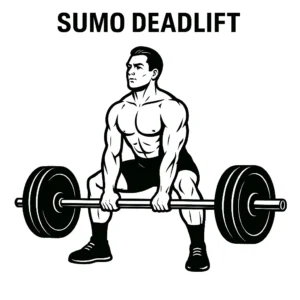
How to Improve Sumo Deadlift Positioning
1. Stance and Foot Placement
- Set feet wider than shoulder-width with toes pointed out.
- Keep the barbell over the midfoot.
- Press evenly through heels and midfoot for balance.
2. Grip and Hand Placement
- Use a double overhand or mixed grip.
- Position hands inside the knees.
- Keep wrists aligned and strong.
3. Engaging the Right Muscles
- Brace the core before lifting.
- Keep the chest up and back flat.
- Push through the heels and engage the glutes.
4. Hip Positioning
- Start with hips lower than conventional deadlifts.
- Drive knees outward to maintain tension.
- Avoid leaning forward too much.
5. Bar Path and Execution
- Keep the bar close to the shins and thighs.
- Pull in a straight vertical line.
- Lock out by extending hips and knees fully.
Common Mistakes and Fixes
Hips Rising Too Fast
- Shifting weight to the back increases strain.
- Solution: Engage glutes and quads early.
Poor Foot Positioning
- A stance too wide or narrow reduces power.
- Solution: Adjust foot width for stability.
Rounding the Back
- A weak core increases injury risk.
- Solution: Tighten the core and keep the chest up.
Incomplete Lockout
- Failing to extend hips reduces activation.
- Solution: Drive hips forward until fully upright.
Sumo Deadlift Variations
Dumbbell Sumo Deadlift
Uses dumbbells for greater range of motion.
Sumo Deadlift High Pull
Adds an explosive pull to the chest.
Conventional Deadlift
Shifts focus to the posterior chain.
Conclusion
The sumo deadlift strengthens legs, glutes, and core. Proper form, stance, and execution maximize efficiency. Fixing common mistakes leads to better performance and safer lifting.
Written By

Join thousands of readers leveling up their fitness.
Skip the guesswork—get insights on training, health, and the right gear to support your progress.
You may also like
10 Best Hamstring Exercises To Strengthen Your Legs
Strong hamstrings are essential for powerful, balanced, and injury-free legs.…
8 Assault Bike Workouts For Every Fitness Goal
The assault bike, also known as the air bike, is one of the most effective…
How to Start Lifting Weights: A Beginner’s Guide
Starting weightlifting can feel intimidating, but it’s one of the most…
7 Best Hip Stretches To Improve Both Pain And Mobility
Tight hips are a common issue for anyone who spends long hours sitting or…

What Is Hybrid Training & How to Build a Hybrid Program
Hybrid training is one of the most effective ways to build a strong, athletic,…

How To Improve Your Grip Strength
A strong grip is more than just a sign of power — it’s a foundation for better…