

Exercises for Strength and GripForearm strength plays a crucial role in grip endurance, lifting performance, and overall upper-body functionality. Strong forearms enhance performance in weightlifting, sports, and everyday activities by improving grip strength, wrist stability, and hand control. Incorporating targeted forearm exercises into a training regimen helps build muscular endurance, size, and functional strength.
Benefits of Forearm Training
Strengthening the forearms offers multiple advantages:
- Improves grip strength – Essential for lifting, pulling, and carrying objects.
- Enhances wrist stability – Supports injury prevention and joint integrity.
- Increases forearm muscle size – Leads to better-defined arms.
- Boosts performance in sports and weightlifting – Supports activities requiring grip endurance.Reduces risk of forearm fatigue – Helps maintain strength during prolonged physical tasks.
Best Forearm
These exercises effectively develop the forearms by targeting different muscle groups involved in grip strength and wrist control.
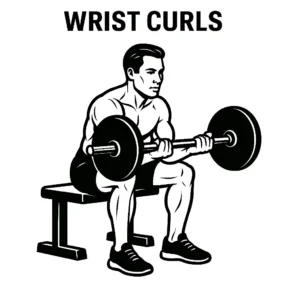
1. Wrist Curls
Wrist curls isolate the flexor muscles of the forearm, improving grip endurance.
- How to Perform:
- Hold a dumbbell or barbell with an underhand grip (palms facing up).
- Rest forearms on a bench or thighs, allowing wrists to hang over the edge.
- Curl the weight upward by flexing the wrists, then slowly lower it.
- Muscles Worked: Forearm flexors.
2. Reverse Wrist Curls
Reverse wrist curls target the extensor muscles, balancing forearm development.
- How to Perform:
- Use a pronated grip (palms facing down) while holding a barbell or dumbbells.
- Rest forearms on a bench or thighs, keeping wrists free to move.
- Extend the wrists upward, then lower with control.
- Muscles Worked: Forearm extensors.
3. Farmer’s Carry
The farmer’s carry builds grip strength and forearm endurance through isometric contraction.
- How to Perform:
- Hold heavy dumbbells or kettlebells at the sides.
- Maintain an upright posture and walk forward.
- Keep a firm grip while engaging core muscles.
- Muscles Worked: Forearms, grip strength, core.
4. Plate Pinch Hold
This grip-strengthening exercise enhances finger and thumb endurance.
- How to Perform:
- Hold a weight plate between the fingers and thumb.
- Maintain grip for 30–60 seconds before switching hands.
- Muscles Worked: Finger flexors, thumb muscles, grip endurance.
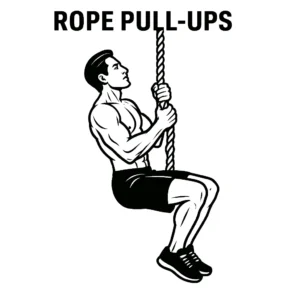
5. Towel or Rope Pull-Ups
Towel or rope pull-ups intensify grip training by increasing the difficulty of holding onto the surface.
- How to Perform:
- Wrap a towel or rope over a pull-up bar.
- Grip both ends and perform pull-ups while maintaining control.
- Muscles Worked: Forearms, biceps, upper back.
6. Reverse Grip Barbell Curl
This variation of the barbell curl strengthens the brachioradialis, a key forearm muscle.
- How to Perform:
- Hold a barbell with an overhand grip (palms facing down).
- Curl the barbell toward the shoulders while keeping wrists stable.
- Muscles Worked: Brachioradialis, forearm flexors.
7. Dead Hangs
Dead hangs develop forearm endurance and grip strength through isometric contraction.
- How to Perform:
- Hang from a pull-up bar with a firm grip.
- Hold for as long as possible, maintaining tension in the forearms.
- Muscles Worked: Grip strength, forearm endurance, shoulder stability.
How Many Forearm Exercises Should Be Included in a Workout?
The number of exercises depends on individual training goals:
- Strength & Mass: 3–4 forearm exercises per session.
- Grip Endurance: 2–3 exercises with longer holds.
- General Fitness: 1–2 exercises as part of an upper-body workout.
Forearm training can be performed 2–3 times per week, allowing adequate recovery.
Are Forearm Exercises Necessary?
While forearm muscles are activated during most upper-body movements, direct training enhances grip performance and muscle development. Athletes, weightlifters, and individuals engaging in grip-intensive activities benefit from dedicated forearm exercises.
Conclusion
Forearm exercises are essential for building grip strength, wrist stability, and muscle endurance. Incorporating a variety of curls, carries, and holds into a training routine improves functional strength and performance in weightlifting, sports, and daily activities. Consistent training and proper exercise selection ensure optimal forearm development.
Written By

Join thousands of readers leveling up their fitness.
Skip the guesswork—get insights on training, health, and the right gear to support your progress.
You may also like
10 Best Hamstring Exercises To Strengthen Your Legs
Strong hamstrings are essential for powerful, balanced, and injury-free legs.…

8 Assault Bike Workouts For Every Fitness Goal
The assault bike, also known as the air bike, is one of the most effective…
How to Start Lifting Weights: A Beginner’s Guide
Starting weightlifting can feel intimidating, but it’s one of the most…
7 Best Hip Stretches To Improve Both Pain And Mobility
Tight hips are a common issue for anyone who spends long hours sitting or…

What Is Hybrid Training & How to Build a Hybrid Program
Hybrid training is one of the most effective ways to build a strong, athletic,…
How To Improve Your Grip Strength
A strong grip is more than just a sign of power — it’s a foundation for better…