

Arm workouts are essential for building strength, improving muscle tone, and enhancing upper-body endurance. A well-structured arm training routine targets key muscle groups, including the biceps, triceps, and shoulders. Beginners benefit from incorporating progressive resistance exercises to develop foundational strength while minimizing injury risks.
Key Muscle Groups in Arm Workouts
Effective arm training focuses on three primary muscle groups:
- Biceps – Responsible for elbow flexion, primarily working in curling movements.
- Triceps – Located on the back of the upper arm, essential for elbow extension.
- Shoulders (Deltoids) – Assist in pressing and lifting movements, contributing to overall upper-body stability.
Best Arm Workouts for Beginners
These exercises provide a balanced approach to developing strength and endurance in the arms.
1. Bicep Curls
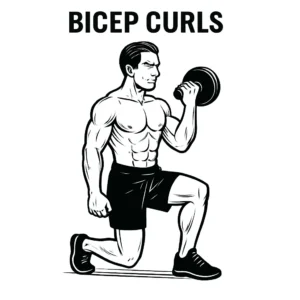
A fundamental exercise that isolates the biceps for muscle growth.
- How to Perform:
- Hold dumbbells with palms facing forward.
- Curl the weights toward the shoulders, keeping elbows close to the torso.
- Lower the dumbbells in a controlled motion.
- Muscles Worked: Biceps.
2. Tricep Dips
Tricep dips strengthen the triceps and shoulders, improving arm definition.
- How to Perform:
- Position hands on the edge of a bench or stable surface.
- Lower the body by bending the elbows until arms reach a 90-degree angle.
- Push back up to the starting position.
- Muscles Worked: Triceps, shoulders.
3. Shoulder Press
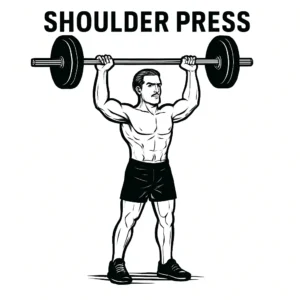
A compound movement that targets the deltoids and triceps, enhancing shoulder strength.
- How to Perform:
- Hold dumbbells at shoulder height, palms facing forward.
- Press the weights overhead until arms fully extend.
- Lower the dumbbells back to the starting position.
- Muscles Worked: Shoulders, triceps.
4. Hammer Curls
Hammer curls engage the biceps and forearms, improving grip strength.
- How to Perform:
- Hold dumbbells with palms facing inward.
- Curl the weights up while keeping elbows stable.
- Lower with control.
- Muscles Worked: Biceps, forearms.
5. Overhead Triceps Extension
This exercise effectively isolates the triceps, increasing arm strength.
- How to Perform:
- Hold a dumbbell with both hands overhead.
- Lower the weight behind the head, keeping elbows steady.
- Extend arms back to the starting position.
- Muscles Worked: Triceps.
6. Lateral Raises
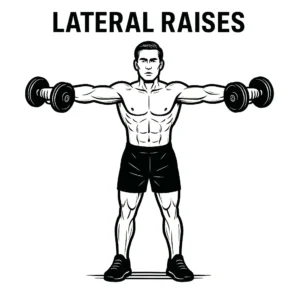
Lateral raises target the deltoid muscles, contributing to broader shoulders.
- How to Perform:
- Hold dumbbells at the sides with palms facing inward.
- Raise arms to shoulder height, keeping them straight.
- Lower the weights with control.
- Muscles Worked: Shoulders.
How Often Should Beginners Train Arms?
The frequency of arm workouts depends on training intensity and recovery:
- Beginners: 2–3 sessions per week with at least 48 hours of rest between workouts.
- Full-Body Workouts: Include 1–2 arm exercises per session.
- Split Training: Perform a dedicated arm workout once per week.
How Many Arm Exercises Should Be Done Per Workout?
A balanced arm workout should include:
- 3–4 exercises focusing on different muscle groups.
- 3–4 sets per exercise, depending on fitness level.
- 8–12 repetitions for strength and muscle endurance.
Conclusion
A structured arm workout routine enhances muscle strength, endurance, and definition. Beginners benefit from progressive resistance training that incorporates bicep, tricep, and shoulder exercises. Training consistently while maintaining proper form and recovery ensures steady progress and injury prevention.
Last Updated on October 11, 2025
Written By

Join thousands of readers leveling up their fitness.
Skip the guesswork—get insights on training, health, and the right gear to support your progress.
You may also like
7 Best Row Exercises to Build Back Strength
Want a stronger, thicker, and more defined back? Start rowing. Row exercises…
What Is the Arnold Press, Its Benefits, & How to Do It Safely
Named after bodybuilding legend Arnold Schwarzenegger, the Arnold Press is more…
How to Do Hip Thrusts the Right Way
Looking to grow stronger, rounder glutes? The hip thrust is one of the most…

How To Do Squats Properly
The squat is often called the king of exercises—and for good reason. It targets…

8 Best Shoulder Mobility Exercises
Stiff shoulders? Limited range of motion? You're not alone. Shoulder mobility…

Why Workout Splits Could Be the Secret to Building Muscle
Ever feel like you're working out hard but not seeing the muscle growth you…