

When people think about building stronger arms, they often focus on the biceps and triceps. While these muscle groups certainly contribute to upper-body strength and appearance, the forearms are just as important. They play a critical role in nearly every pulling, lifting, carrying, and gripping movement you perform both inside and outside the gym.
Whether you’re deadlifting heavier weights, climbing, playing sports, carrying groceries, or simply opening a stubborn jar, your forearms are constantly working. Despite this, they are one of the most overlooked muscle groups in many training programs.
Strong forearms do much more than improve aesthetics. They increase grip strength, enhance wrist stability, improve muscular endurance, and help you perform better in compound exercises such as pull-ups, rows, deadlifts, and farmer’s carries. Developing stronger forearms can also reduce fatigue during long training sessions and improve control during functional movements.
Many people assume that lifting heavy weights alone is enough to develop the forearms. While compound exercises certainly activate these muscles, dedicated forearm training produces greater improvements in strength, endurance, and muscle size. By including a few targeted exercises in your weekly routine, you can build a stronger grip that carries over into almost every aspect of fitness.
This guide explores seven of the best forearm exercises, explains why they work, and provides practical advice on incorporating them into your workouts for maximum results.
Why Forearm Strength Matters
The forearm contains more than a dozen muscles responsible for controlling the movements of your wrists, hands, and fingers. These muscles work together every time you grip a barbell, hold a dumbbell, swing a kettlebell, or perform everyday tasks that require hand strength.
Because these muscles are involved in so many activities, improving forearm strength offers benefits that extend far beyond appearance.
A stronger grip allows you to hold heavier weights for longer periods, making exercises such as deadlifts, pull-ups, rows, and shrugs more effective. Instead of your hands giving out before your larger muscle groups become fatigued, stronger forearms allow you to fully challenge your back, shoulders, and legs.
Forearm training also contributes to healthier wrists. Strengthening the muscles surrounding the wrist joint improves stability and helps support repetitive movements performed during sports, manual labor, and resistance training.
Athletes in sports such as rock climbing, tennis, baseball, wrestling, golf, and martial arts also rely heavily on grip endurance. Even office workers who spend hours typing may benefit from stronger forearms, as balanced muscle development can improve wrist stability and reduce discomfort associated with repetitive movements.
Best Forearm Exercises
1. Wrist Curls
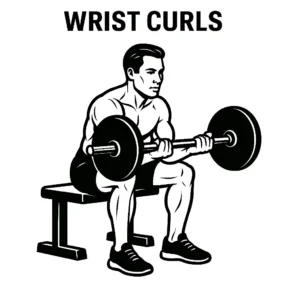
The wrist curl is one of the most effective isolation exercises for strengthening the forearm flexor muscles. Although it appears simple, it develops the muscles responsible for gripping objects securely and maintaining hand strength during pulling exercises.
Sit on a bench with your forearms resting comfortably on your thighs or another stable surface. Hold a barbell or dumbbells with your palms facing upward and allow your wrists to extend slightly beyond your knees.
Begin the movement by curling your wrists upward as far as comfortably possible. Pause briefly at the top while squeezing your forearm muscles before lowering the weight slowly back to the starting position.
Avoid using momentum. Slow, controlled repetitions keep constant tension on the target muscles and produce better long-term results.
Beginners should start with light weights to master the movement before progressing to heavier loads.
2. Reverse Wrist Curls
While wrist curls strengthen the flexor muscles, reverse wrist curls target the forearm extensors located on the opposite side of the arm. Training both sides equally helps create balanced muscular development while supporting healthy wrist function.
Using an overhand grip, rest your forearms on your thighs or a bench and slowly raise the backs of your hands toward your forearms.
Because the extensor muscles are naturally smaller and weaker than the flexors, begin with lighter weights than you would use for standard wrist curls.
Developing these muscles can improve wrist stability, enhance grip endurance, and reduce muscle imbalances that sometimes contribute to overuse injuries.
3. Farmer’s Carry
Few exercises develop functional grip strength as effectively as the farmer’s carry.
Rather than isolating one muscle group, this exercise challenges your forearms, shoulders, core, upper back, and legs simultaneously while forcing your hands to maintain a powerful grip throughout the movement.
Stand between two heavy dumbbells or kettlebells and lift them using proper deadlift technique. Keep your shoulders back, chest upright, and core engaged as you begin walking forward with controlled steps.
Avoid swinging the weights or allowing your shoulders to round. Instead, maintain steady posture while gripping the handles as tightly as possible.
Farmer’s carries closely replicate many real-world activities, making them one of the best functional strength exercises you can perform. They also improve overall work capacity and muscular endurance, making them valuable for athletes and recreational lifters alike.
4. Plate Pinch Hold
The plate pinch hold is one of the simplest yet most effective exercises for building crushing grip strength. Unlike traditional lifting movements that rely on wrapping your fingers around a handle, this exercise challenges your thumb and fingers to generate enough force to keep two smooth plates from slipping apart.
Strong pinch grip is valuable for athletes, climbers, manual laborers, and anyone looking to improve overall hand strength. It also carries over to other lifting exercises by improving your ability to maintain control of heavy weights.
To perform the exercise, stand upright and hold one or two weight plates together with your fingers on one side and your thumb on the other. Keep your shoulders relaxed and your posture tall while maintaining the grip for 20 to 60 seconds. Lower the plates carefully before switching hands if training one side at a time.
Rather than chasing the heaviest plates possible, focus on maintaining a firm grip throughout the entire hold. As your strength improves, gradually increase either the weight or the duration of each hold.
5. Towel or Rope Pull-Ups
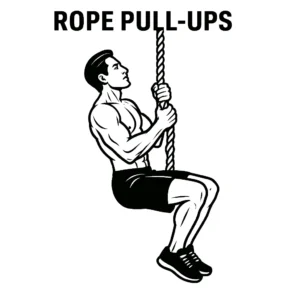
If you’re looking for a challenging exercise that develops grip strength while strengthening your upper body, towel pull-ups deserve a place in your workout routine.
Wrapping towels over a pull-up bar creates a thicker, less stable gripping surface. Your forearms, fingers, and hands must work much harder to prevent the towels from slipping while your back and arms perform the pulling movement.
Begin by securely looping two towels over a sturdy pull-up bar. Grip each towel firmly, engage your core, and pull yourself upward until your chin clears your hands. Lower yourself slowly under control before beginning the next repetition.
If standard towel pull-ups are too difficult, start with assisted pull-ups or simply hang from the towels for as long as possible. Even static holds provide an excellent forearm workout while helping you build the strength needed for full repetitions.
This exercise is especially beneficial for rock climbers, wrestlers, obstacle course racers, and anyone who relies heavily on grip endurance.
6. Reverse Grip Barbell Curl
Although most people associate curls with building the biceps, changing your grip transforms the movement into one of the best forearm builders available.
The reverse grip barbell curl places greater emphasis on the brachioradialis, a large muscle running along the outside of the forearm. Developing this muscle not only improves arm size but also increases pulling strength during rows, pull-ups, and deadlifts.
Stand with your feet shoulder-width apart while holding a barbell or EZ curl bar using an overhand grip. Keep your elbows close to your sides and curl the weight toward your shoulders without swinging your body.
Pause briefly at the top before lowering the weight under control. Avoid using excessive momentum, as slow, controlled repetitions place more tension on the target muscles and reduce stress on the wrists.
Many lifters find that they must use significantly lighter weights than during traditional curls. This is completely normal, as the forearm muscles fatigue more quickly than the larger muscles of the upper arm.
7. Dead Hangs
Dead hangs may appear deceptively easy, but they are one of the most effective exercises for developing grip endurance and forearm stamina.
Simply hanging from a pull-up bar forces every muscle involved in gripping to remain under continuous tension. At the same time, dead hangs strengthen the shoulders, improve scapular stability, and help decompress the spine after heavy lifting sessions.
Grab a pull-up bar with an overhand grip slightly wider than shoulder width. Allow your body to hang naturally while keeping your shoulders engaged rather than completely relaxed. Hold the position for as long as possible while maintaining control.
Beginners may only manage 15 to 20 seconds, while advanced athletes often exceed one minute. Focus on improving your time gradually rather than comparing yourself to others.
Dead hangs make an excellent finisher at the end of an upper-body workout because they challenge both muscular endurance and mental toughness.
How Often Should You Train Your Forearms?
Unlike larger muscle groups, the forearms recover relatively quickly because they are accustomed to frequent daily use. Most people can train them two or three times each week without interfering with recovery.
If your workouts already include exercises such as pull-ups, rows, deadlifts, or heavy carries, your forearms are receiving indirect stimulation. In this case, adding two or three targeted exercises at the end of your workout is usually enough to promote noticeable improvements.
Recovery remains important. Like any muscle group, the forearms need time to repair and grow. If your grip feels unusually weak or your wrists remain sore for several days, consider reducing your training volume temporarily.
Recovery Tips
Recovery is often overlooked, especially for smaller muscle groups like the forearms. Because your forearms are involved in many daily activities, they can become fatigued more quickly than you might expect.
Allow at least 48 hours before performing another intense forearm workout. During this recovery period, light stretching and mobility exercises can improve circulation without interfering with muscle repair.
Foam rolling the forearm muscles or gently massaging the wrists and hands may help reduce stiffness after demanding grip workouts.
Getting seven to nine hours of quality sleep each night remains one of the most effective recovery strategies available. Sleep supports muscle repair, hormone regulation, and overall physical performance.
Finally, listen to your body. Persistent pain around the wrists or elbows is not a normal part of training and should not be ignored. If discomfort continues despite adequate rest, reduce your training volume and consider seeking guidance from a qualified healthcare professional.
Nutrition for Stronger Forearms
No training program can deliver optimal results without proper nutrition.
Building stronger forearms requires the same nutritional foundation as developing any other muscle group. Consuming enough high-quality protein supports muscle repair and growth after each workout. Good sources include lean meats, fish, eggs, dairy products, legumes, and protein-rich plant foods.
Carbohydrates provide the energy needed for productive training sessions, while healthy fats support hormone production and overall recovery.
Hydration is equally important. Dehydrated muscles fatigue more quickly, reducing both grip strength and workout performance. Drinking enough water throughout the day helps maintain muscle function and supports recovery.
If your goal is increasing forearm size, ensure you’re consuming enough calories to support muscle growth. If your primary objective is improving grip strength for sports or lifting performance, maintaining a balanced diet while focusing on progressive overload will usually produce excellent results.
Common Mistakes to Avoid
Many people train their forearms regularly but fail to see meaningful progress because of avoidable mistakes.
One of the most common errors is relying on momentum instead of muscular control. Swinging the weight during wrist curls or reverse curls reduces tension on the forearms and shifts the workload elsewhere. Every repetition should be slow, controlled, and deliberate.
Another mistake is neglecting the extensor muscles. Many lifters focus exclusively on grip and wrist flexion exercises while ignoring the muscles on the opposite side of the forearm. Balanced training improves overall strength, wrist stability, and injury prevention.
Using straps for every pulling exercise can also limit forearm development. While lifting straps are useful during maximal lifts, relying on them for every workout reduces the opportunity to strengthen your natural grip.
Recovery is equally important. Because the forearms are involved in nearly every upper-body movement, excessive training without adequate rest can lead to soreness, fatigue, and overuse injuries. Two or three focused forearm sessions each week are typically enough for most people.
Final Thoughts
Strong forearms are about much more than appearance. They improve your ability to lift heavier weights, perform better in sports, carry everyday objects with greater ease, and maintain control during demanding exercises. Because the forearms are involved in nearly every pulling and gripping movement, developing them can have a noticeable impact on your overall strength and athletic performance.
While many compound lifts provide indirect forearm training, dedicated exercises remain one of the most effective ways to improve grip endurance, wrist stability, and muscular development. By incorporating movements such as wrist curls, reverse wrist curls, farmer’s carries, plate pinch holds, towel pull-ups, reverse grip barbell curls, and dead hangs into your routine, you’ll strengthen every major muscle involved in gripping and wrist control.
Remember that progress comes from consistency rather than complexity. Focus on mastering proper technique, gradually increasing the challenge through progressive overload, and allowing enough time for recovery. Combined with good nutrition and a balanced strength-training program, these exercises will help you build stronger forearms that support better performance both inside and outside the gym.
Last Updated on August 4, 2026
Written By

Join thousands of readers leveling up their fitness.
Skip the guesswork—get insights on training, health, and the right gear to support your progress.
You may also like
How To Do A Lat Pulldown Correctly
The lat pulldown is one of the best exercises for building a wider, stronger…
10 Different Types Of Deadlifts And Their Benefits
The deadlift is one of the most powerful compound exercises for building…

How to Strengthen Your Knees for Running
Strong, healthy knees are essential for runners, whether you’re logging miles…

Compound vs. Isolation Exercises: What’s the Difference?
When it comes to strength training, all exercises can generally be divided into…
Back Squat Exercise Guide: How to Master Back Squats
The back squat is one of the most effective strength training exercises for…
10 Medicine Ball Ab Exercises You Need To Try
If you’re tired of traditional crunches and planks, it’s time to add some…