

The barbell row is a key compound exercise for building back strength. It targets multiple muscles and improves posture. Proper barbell row form prevents injuries and maximizes gains. This guide explains how to do bent-over barbell rows correctly, step by step.
What Is a Barbell Row?
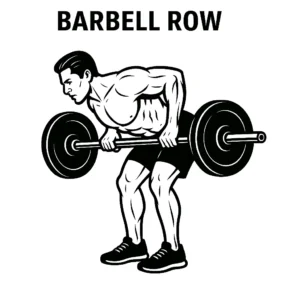
A barbell row is a strength exercise where you pull a weighted bar toward your torso from a bent-over stance. It strengthens the back, shoulders, biceps, and core.
Muscles Worked
This exercise activates multiple muscle groups:
- Latissimus dorsi (lats) – Major pulling muscles in the back
- Trapezius and rhomboids – Shoulder stability and posture
- Rear deltoids – Shoulder strength
- Biceps brachii – Arm flexion
- Spinal erectors – Lower back support
- Core muscles – Stability and control
How to Do Barbell Rows with Proper Form
1. Setup and Positioning
- Stand shoulder-width apart with the barbell over your midfoot.
- Keep your back straight, chest up, and shoulders tight.
- Bend at the hips and knees to lower your torso.
- Grip the bar shoulder-width apart, palms down.
2. Lifting the Barbell
- Brace your core and squeeze your glutes.
- Lift the bar by extending your legs.
- Hinge forward until your torso is at a 45-degree angle.
3. The Rowing Motion
- Pull the bar toward your lower ribs by driving your elbows back.
- Keep the bar close to your body.
- Squeeze your shoulder blades at the top.
- Lower the bar slowly, extending your arms fully.
4. Breathing and Stability
- Inhale before pulling.
- Exhale as the bar reaches your torso.
- Keep your core tight to protect your lower back.
Common Mistakes and How to Fix Them
Rounding the Back
- A rounded back strains the spine.
- Keep your chest up and back neutral.
Using Momentum
- Swinging the bar reduces effectiveness.
- Pull in a controlled motion.
Standing Too Upright
- If your torso is too vertical, the movement becomes a shrug.
- Stay at a 45-degree angle for proper muscle activation.
Improper Grip
- A grip that is too wide or narrow affects form.
- Use a shoulder-width grip for balance and strength.
Variations and Alternatives
Bent-Over Barbell Rows
Involves a deeper hip hinge for more back engagement.
Pendlay Rows
Starts from the floor each rep, increasing power.
Dumbbell Rows
Allows for a greater range of motion and muscle isolation.
Conclusion
The barbell row is essential for back development. Proper barbell rows form ensures safety and maximizes gains. Focus on core engagement, grip, and controlled motion. Avoid common mistakes to get the best results.
Written By

Join thousands of readers leveling up their fitness.
Skip the guesswork—get insights on training, health, and the right gear to support your progress.
You may also like

10 Best Hamstring Exercises To Strengthen Your Legs
Strong hamstrings are essential for powerful, balanced, and injury-free legs.…

8 Assault Bike Workouts For Every Fitness Goal
The assault bike, also known as the air bike, is one of the most effective…

How to Start Lifting Weights: A Beginner’s Guide
Starting weightlifting can feel intimidating, but it’s one of the most…

7 Best Hip Stretches To Improve Both Pain And Mobility
Tight hips are a common issue for anyone who spends long hours sitting or…

What Is Hybrid Training & How to Build a Hybrid Program
Hybrid training is one of the most effective ways to build a strong, athletic,…

How To Improve Your Grip Strength
A strong grip is more than just a sign of power — it’s a foundation for better…