

If you’re looking to build a stronger, more stable core without endless crunches or sit-ups, the Pallof Press is one of the best exercises you can add to your routine. It looks simple but delivers serious results by targeting your deep stabilizing muscles and teaching your body to resist unwanted movement.
What is the Pallof Press?
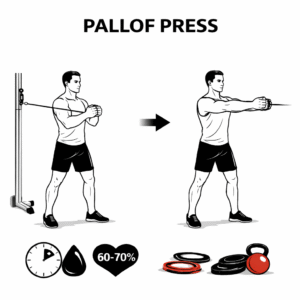
The Pallof Press is an anti-rotation exercise that challenges your core to stay stable while pushing a band or cable away from your body. Unlike typical ab workouts that involve bending or twisting, the Pallof Press strengthens your core by resisting movement, improving balance, coordination, and posture.
It’s commonly performed using a resistance band or cable machine, making it adaptable for beginners and advanced athletes alike.
Muscles Worked
The Pallof Press primarily engages your core stabilizers, including:
- Rectus abdominis (front abs)
- Obliques (sides of your core)
- Transverse abdominis (deep core muscle)
- Lower back and glutes (for stability)
- Shoulders and chest (as secondary stabilizers)
Because it targets both your abs and supporting muscles, it’s one of the most effective exercises for total core control.
How to Do the Banded Pallof Press
1. Set up your band or cable
Attach a resistance band or cable handle at chest height. Stand perpendicular to the anchor point, the band should pull you sideways.
2. Assume a stable stance
Stand with feet shoulder-width apart and hold the band with both hands close to your chest. Your arms should be bent, and your body facing straight ahead.
3. Engage your core
Brace your abs as if you’re about to be punched. Keep your ribs down and spine neutral.
4. Press forward
Extend your arms straight out in front of your chest. Resist the pull of the band. This is where the core engagement happens.
5. Return slowly
Bring your hands back to your chest with control. That’s one rep.
6. Repeat
Perform 10–15 reps per side for 2–3 sets.
Common Mistakes to Avoid
- Twisting your torso: The goal is to resist rotation — stay square to the front.
- Arching your back: Keep your ribs tucked and glutes engaged.
- Using too much resistance: Start light and focus on control over tension.
- Rushing the movement: The slower the press, the more your core works.
Variations of the Pallof Press
- Half-Kneeling Banded Pallof Press – Great for isolating the core and improving hip stability.
- Banded Pallof Press with Rotation – Adds controlled movement to strengthen obliques.
- Tall Kneeling Pallof Press – Engages glutes and lower back more actively.
- Standing Overhead Pallof Press – Increases shoulder and upper-body involvement.
Benefits of the Pallof Press
- Improves core strength and stability
- Builds anti-rotational control (essential for athletes)
- Reduces lower back strain by strengthening stabilizers
- Enhances posture and balance
- Requires minimal equipment — perfect for home or gym workouts
Programming Tips
- Include the Pallof Press 2–3 times per week as part of your core or warm-up routine.
- Pair it with other stability-focused movements like planks or dead bugs.
- For progression, increase band resistance, time under tension, or try single-arm variations.
Final Thoughts
The Pallof Press may not look intense, but it’s one of the most effective moves for building real-world core strength. Whether you use a band or cable, mastering this anti-rotation exercise will improve your posture, balance, and performance in every other lift you do.
Written By

Join thousands of readers leveling up their fitness.
Skip the guesswork—get insights on training, health, and the right gear to support your progress.
You may also like
How To Do A Lat Pulldown Correctly
The lat pulldown is one of the best exercises for building a wider, stronger…
10 Different Types Of Deadlifts And Their Benefits
The deadlift is one of the most powerful compound exercises for building…

How to Strengthen Your Knees for Running
Strong, healthy knees are essential for runners, whether you’re logging miles…
Compound vs. Isolation Exercises: What’s the Difference?
When it comes to strength training, all exercises can generally be divided into…
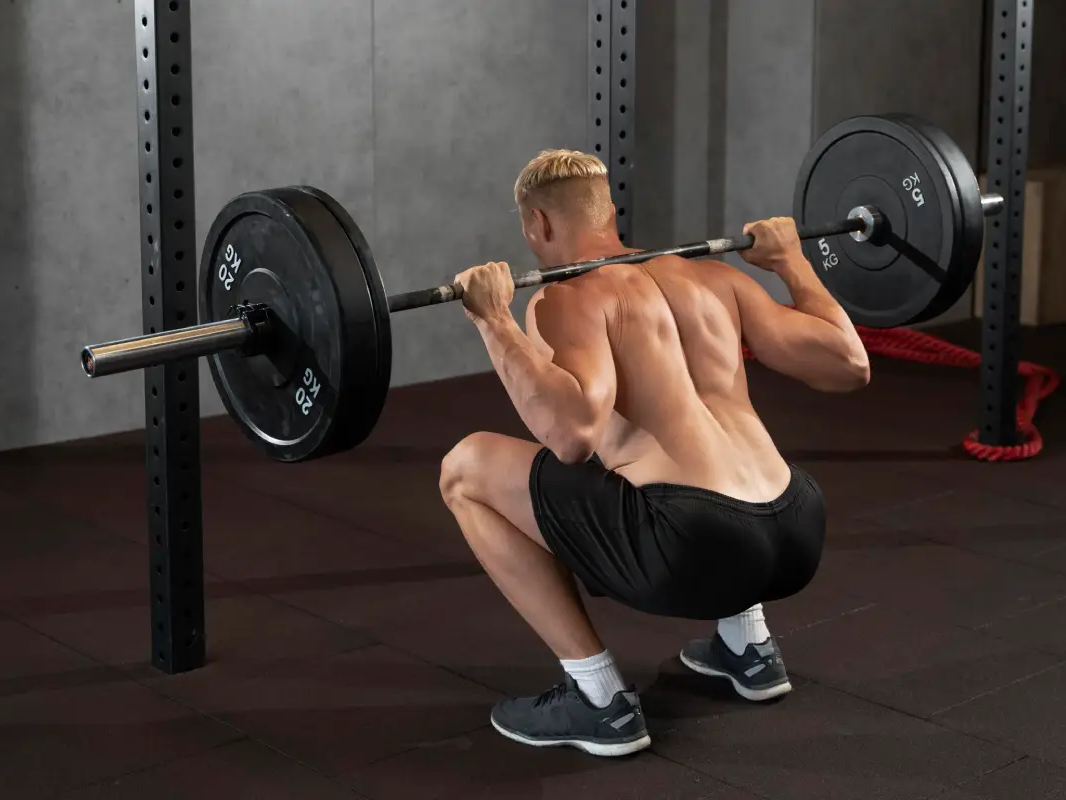
Back Squat Exercise Guide: How to Master Back Squats
The back squat is one of the most effective strength training exercises for…
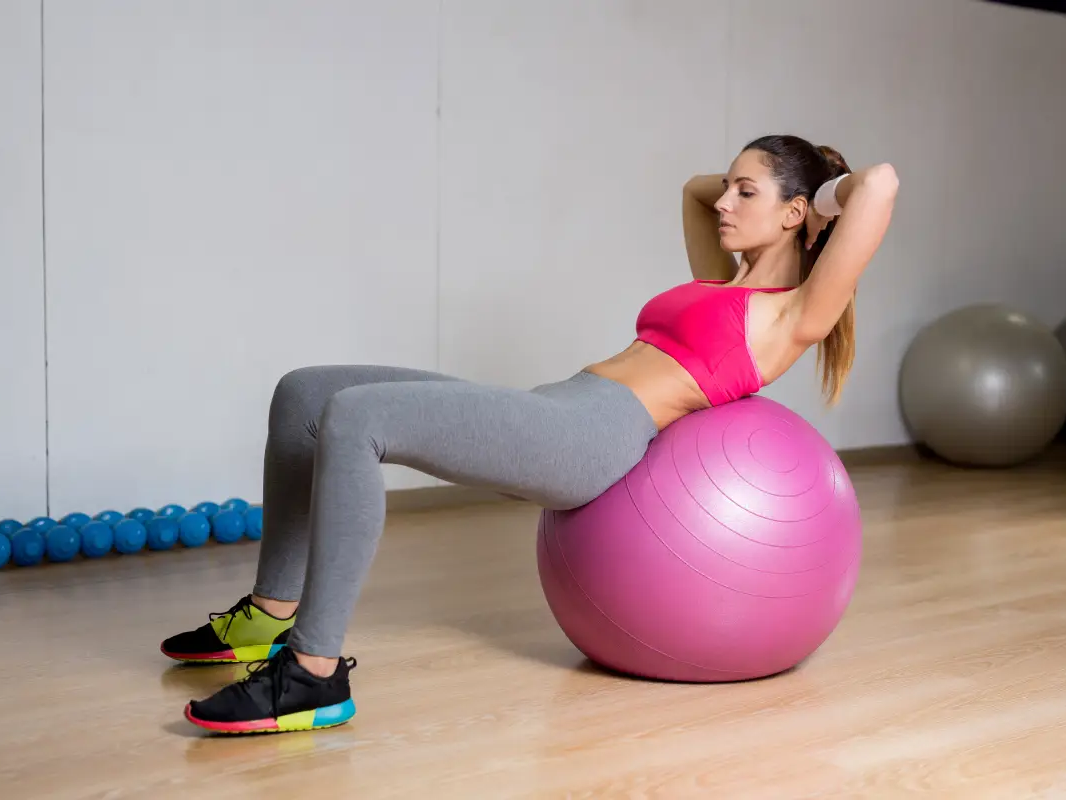
10 Medicine Ball Ab Exercises You Need To Try
If you’re tired of traditional crunches and planks, it’s time to add some…