

Resistance bands are one of the most versatile and affordable fitness tools you can own. Whether you’re working out at home, in the gym, or while traveling, they offer a full-body workout that improves strength, flexibility, and muscle tone. But to make the most of them, it’s important to learn how to use resistance bands correctly.
What Are Resistance Bands?
Resistance bands are elastic workout tools that create tension during exercise. This resistance challenges your muscles in a way similar to weights, but with more control and flexibility. They come in different levels of resistance light, medium, and heavy, so you can adjust the intensity of your workout based on your fitness level and goals.
Benefits of Using Resistance Bands
- Portable and space-saving: Easy to carry anywhere.
- Joint-friendly: Provide smoother resistance, reducing strain on joints.
- Adaptable: Suitable for all fitness levels.
- Full-body training: Can target legs, arms, back, chest, and core.
- Affordable: Great for beginners who want effective workouts without heavy equipment.
How to Use Resistance Bands for Different Muscle Groups
1. Legs
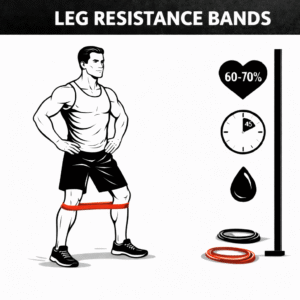
To strengthen your lower body, loop a resistance band around your thighs or ankles. Try:
- Squats with a resistance band: Adds tension to your glutes and thighs.
- Lateral band walks: Improves hip strength and stability.
- Glute kickbacks: Targets the glutes and hamstrings.
2. Arms
You can use resistance bands to tone your biceps, triceps, and shoulders:
- Bicep curls: Stand on the band and curl upward, keeping elbows close to your sides.
- Tricep extensions: Anchor the band overhead and extend your arms downward.
- Lateral raises: Strengthens shoulders and improves posture.
3. Back and Chest
Resistance bands are excellent for building upper-body strength:
- Seated rows: Anchor the band at your feet and pull toward your torso.
- Chest press: Wrap the band behind your back and press forward like push-ups.
- Pull-aparts: Strengthen your back and improve shoulder stability.
4. Core
Engage your abs with controlled band movements:
- Standing rotations: Anchor the band and twist your torso.
- Kneeling crunches: Anchor the band above you and pull down as you crunch.
- Plank pulls: Add resistance while maintaining core stability.
How to Use Resistance Bands at Home
Resistance bands are perfect for home workouts because they don’t require much space or setup. You can anchor them to a door, furniture, or even use your own body weight for stability. Combine 5–6 exercises for a full-body workout in under 30 minutes.
Beginner Resistance Band Workout
If you’re just starting, try this simple routine:
- Squats – 3 sets of 12 reps
- Bicep Curls – 3 sets of 10 reps
- Seated Rows – 3 sets of 12 reps
- Lateral Band Walks – 2 sets of 15 steps per side
- Standing Rotations – 3 sets of 10 reps per side
Tips for Using Resistance Bands Safely
- Check for wear and tear: Replace damaged bands immediately.
- Control the movement: Avoid snapping the band or jerking motions.
- Maintain good posture: Keep your back straight and engage your core.
- Start light: Gradually increase resistance as your strength improves.
Final Thoughts
Resistance bands are simple but powerful tools that can transform your fitness routine. Whether your goal is to tone, strengthen, or rehab muscles, consistency and proper form are key. Learn how to use resistance bands correctly, and you’ll discover how effective a small piece of elastic can be.
Written By

Join thousands of readers leveling up their fitness.
Skip the guesswork—get insights on training, health, and the right gear to support your progress.
You may also like
6 Best Quad Exercises For Strength & Mass
The quadriceps play a crucial role in lower-body strength, power, and…
11 Best Gym Slides in the Philippines
Discover the best gym slides available in the Philippines—ideal for gym…
11 Best Chest Strap Heart Rate Monitors in the Philippines
Chest strap heart rate monitors offer unparalleled accuracy for fitness…
11 Best Knee Sleeves in the Philippines
Knee sleeves are essential for athletes and fitness enthusiasts seeking joint…
11 Best Lifting Straps in the Philippines
Discover the 11 best lifting straps available in the Philippines to boost your…
11 Best Weightlifting Belts in the Philippines
Looking for the best weightlifting belts in the Philippines? This guide…