

The dumbbell lateral raise is one of the most effective exercises for developing strong, well-rounded shoulders. Whether your goal is to improve upper-body aesthetics, increase shoulder strength, or create better definition, this simple movement deserves a place in your workout routine. While it may appear easy, performing lateral raises with proper technique requires control, patience, and attention to detail.
Many gym-goers make the mistake of treating the lateral raise as an exercise that simply involves lifting dumbbells out to the sides. In reality, the movement is far more technical than it looks. Poor form often shifts the workload away from the shoulders and places unnecessary stress on the neck, upper traps, and shoulder joints. This not only limits muscle growth but can also increase the risk of injury over time.
When performed correctly, dumbbell lateral raises isolate the lateral deltoids while recruiting several supporting muscles that contribute to shoulder stability and upper-body strength. They are suitable for beginners learning proper lifting mechanics, experienced lifters aiming to build wider shoulders, and athletes looking to improve shoulder endurance and control.
In this guide, you’ll learn exactly how to perform a dumbbell lateral raise with proper form, understand which muscles are involved, discover the benefits of adding the exercise to your routine, and learn the common mistakes that prevent many people from getting the results they want.
What Are Dumbbell Lateral Raises?
The dumbbell lateral raise is an isolation exercise designed to strengthen the shoulder muscles, particularly the lateral or middle head of the deltoid. Unlike compound exercises such as the overhead press, which involve multiple muscle groups working together, lateral raises focus primarily on one area of the shoulder. This targeted approach makes them especially effective for improving shoulder width and creating a balanced upper-body appearance.
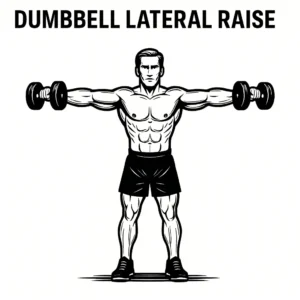
The movement involves holding a dumbbell in each hand and raising both arms out to the sides until they reach approximately shoulder height before lowering them under control. Although the motion is straightforward, maintaining proper posture and resisting the urge to use momentum are essential for maximizing muscle activation.
Because lateral raises do not require heavy weights to be effective, they are accessible to nearly everyone. Beginners can start with light dumbbells to learn proper technique, while advanced lifters can manipulate tempo, repetitions, and training volume to continue making progress.
Beyond aesthetics, stronger shoulders contribute to better performance during many other exercises, including bench presses, overhead presses, pull-ups, push-ups, and rows. Developing the deltoids also improves shoulder stability, making everyday lifting and athletic movements safer and more efficient.
Muscles Worked During Dumbbell Lateral Raises
Although the lateral raise is considered an isolation exercise, several muscles work together to perform the movement efficiently.
The primary muscle responsible for lifting the arms is the lateral deltoid. Located on the outside of the shoulder, this muscle gives the shoulders their width and rounded appearance. When properly targeted, it helps create the broad, symmetrical upper body many lifters strive to achieve.
The anterior deltoid, found at the front of the shoulder, assists during the movement but should not dominate the exercise. Proper arm positioning helps ensure the lateral deltoid remains the primary focus.
The posterior deltoid, located at the back of the shoulder, contributes to shoulder stability throughout the lift. While it is not the main muscle being trained, it helps control the movement, especially during the lowering phase.
The trapezius muscles provide support by stabilizing the shoulder blades. However, excessive trap involvement usually indicates that the weight is too heavy or the shoulders are shrugging during the exercise.
The rotator cuff muscles also play an important role. These smaller muscles stabilize the shoulder joint and help maintain proper alignment as the arms move through the range of motion.
Finally, your core muscles work continuously to keep your torso stable and prevent unnecessary swinging. Even though lateral raises focus on the shoulders, maintaining a strong core contributes significantly to proper technique.
How to Do a Dumbbell Lateral Raise Correctly
Mastering the dumbbell lateral raise starts with proper setup. Stand upright with your feet approximately shoulder-width apart to create a stable base. Hold a dumbbell in each hand with your palms facing your body and allow the weights to rest naturally beside your thighs. Maintain a slight bend in your elbows and keep your shoulders relaxed rather than shrugged upward.
Before beginning the movement, tighten your core and keep your chest lifted. This helps stabilize your spine and prevents unnecessary leaning during the exercise. Your gaze should remain forward throughout the entire movement.
Raise both dumbbells slowly out to your sides in a wide arc. Lead with your elbows instead of your hands, allowing the elbows to remain slightly higher than the wrists. Continue lifting until your arms reach approximately shoulder height. There is no need to raise the weights higher, as doing so shifts more of the workload to the trapezius muscles instead of the lateral deltoids.
Pause briefly at the top while maintaining full control. Avoid letting momentum carry the weights upward or allowing your shoulders to shrug. Focus on feeling the sides of your shoulders contract before lowering the dumbbells slowly back to the starting position.
The lowering phase is just as important as the lifting phase. Resist gravity rather than allowing the weights to drop quickly. Controlling the descent increases time under tension and encourages greater muscle development.
Repeat the movement using the same smooth tempo for every repetition. Quality always matters more than the amount of weight being lifted.
Breathing Technique
Proper breathing helps maintain stability and improves overall lifting performance.
Take a deep breath before beginning each repetition. Inhale as you prepare to lift the dumbbells, keeping your core engaged throughout the movement. Exhale steadily as you raise the weights to shoulder height. As you lower the dumbbells back to the starting position, inhale again while maintaining complete control.
Developing consistent breathing habits helps improve posture, reduces unnecessary tension, and allows you to maintain better control throughout every set.
Common Mistakes to Avoid During Dumbbell Lateral Raises
Although the dumbbell lateral raise is often considered a beginner-friendly exercise, it is surprisingly easy to perform incorrectly. Small technical errors can reduce shoulder activation, increase stress on the joints, and limit your progress over time. Paying attention to proper mechanics will help you get more out of every repetition while lowering the risk of injury.
One of the most common mistakes is choosing weights that are too heavy. Many people believe heavier dumbbells will produce faster results, but excessive weight usually causes the body to compensate by swinging the arms or leaning backward. Instead of isolating the lateral deltoids, the movement becomes a full-body effort that relies on momentum. Selecting a lighter weight allows you to maintain strict form and keeps the focus where it belongs.
Shrugging the shoulders during the lift is another frequent problem. When the shoulders rise toward the ears, the upper trapezius muscles begin doing more of the work than the lateral deltoids. Keeping your shoulders relaxed and down throughout the movement ensures the side delts remain the primary target.
Some lifters also raise the dumbbells too high. Lifting beyond shoulder level may seem like it creates a larger range of motion, but it often shifts tension away from the deltoids and places unnecessary stress on the shoulder joint. Stopping when your arms are approximately parallel to the floor is generally the safest and most effective approach.
Another mistake is allowing the wrists to bend excessively. The wrists should remain neutral throughout the exercise, creating a straight line from the forearm to the hand. Excessive wrist movement reduces stability and can make the exercise feel uncomfortable.
Finally, many people rush through the lowering phase. Simply letting the dumbbells fall back to your sides wastes an opportunity to challenge the muscles. Lowering the weights slowly under control increases time under tension and encourages greater muscle growth.
Benefits of Dumbbell Lateral Raises
The dumbbell lateral raise offers far more than cosmetic improvements. While it is one of the best exercises for creating wider shoulders, its benefits extend to strength, stability, posture, and athletic performance.
One of the most noticeable benefits is improved shoulder width. Since the lateral deltoid is responsible for the outer shape of the shoulder, strengthening this muscle creates a broader and more balanced upper-body appearance. This is especially valuable for individuals looking to improve overall body proportions.
The exercise also enhances shoulder stability. Stronger deltoids and supporting muscles help stabilize the shoulder joint during pressing, pulling, and overhead movements. This improved stability contributes to better lifting mechanics across many other exercises.
Another important benefit is injury prevention. Balanced shoulder development helps reduce muscular imbalances that can lead to poor posture and unnecessary stress on the shoulder joint. While no exercise can completely eliminate the risk of injury, strengthening the muscles that support the shoulder contributes to healthier movement patterns.
Athletes also benefit from stronger shoulders. Sports such as basketball, volleyball, swimming, tennis, baseball, and martial arts all require shoulder strength and endurance. Regularly performing lateral raises can improve control during overhead movements while supporting overall athletic performance.
Perhaps one of the biggest advantages is accessibility. The exercise requires minimal equipment and can be performed almost anywhere with a pair of dumbbells, making it suitable for home workouts and commercial gyms alike.
Dumbbell Lateral Raise Variations
Once you have mastered the standard dumbbell lateral raise, introducing variations can keep your workouts challenging while targeting the shoulders from different angles.
Seated Dumbbell Lateral Raise
Performing the exercise while seated removes much of the body’s ability to generate momentum. Without assistance from the legs or torso, the shoulders perform nearly all the work. This variation is excellent for improving technique and maintaining strict form.
Single-Arm Lateral Raise
Working one arm at a time allows you to concentrate fully on each shoulder. This variation is particularly useful for correcting strength imbalances and improving the mind-muscle connection.
Learning Lateral Raise
Holding onto a stable object while leaning slightly away changes the resistance profile of the movement. This variation keeps more tension on the lateral deltoid throughout the range of motion and can provide a new training stimulus for experienced lifters.
Cable Lateral Raise
Using a cable machine creates constant resistance from beginning to end, unlike dumbbells where resistance changes as the arm moves. Many advanced lifters use cables to maintain continuous tension on the deltoids.
Resistance Band Lateral Raise
Resistance bands offer a portable alternative for home workouts. They provide increasing resistance as the arms rise, making them an effective option when dumbbells are unavailable.
Recommended Sets and Repetitions
Your ideal training volume depends on your primary fitness goal.
For building muscle, perform three to four sets of ten to fifteen repetitions using a weight that challenges you while allowing strict form throughout every set.
If your goal is muscular endurance, perform two to three sets of fifteen to twenty repetitions with lighter dumbbells and controlled movement.
Although lateral raises are rarely used for maximum strength training, experienced lifters may occasionally perform heavier sets of eight to ten repetitions while maintaining excellent technique.
Remember that increasing weight should never come at the expense of proper form.
Conclusion
The dumbbell lateral raise remains one of the most effective exercises for building stronger, wider, and more balanced shoulders. While it may appear simple, mastering proper form is essential for maximizing muscle activation and protecting the shoulder joints from unnecessary strain.
By performing each repetition with control, using appropriate resistance, and avoiding common technical mistakes, you can effectively target the lateral deltoids while improving shoulder stability, posture, and overall upper-body performance. Consistency, patience, and attention to detail will always produce better results than lifting heavier weights with poor technique.
Whether you are training for improved athletic performance, greater upper-body strength, or enhanced physique development, the dumbbell lateral raise deserves a permanent place in your workout program. Combined with other well-rounded shoulder exercises and a progressive training plan, it can help you build stronger, healthier shoulders that not only look impressive but also support better movement in the gym and everyday life.
Last Updated on July 23, 2026
Written By

Join thousands of readers leveling up their fitness.
Skip the guesswork—get insights on training, health, and the right gear to support your progress.
You may also like
How To Do A Lat Pulldown Correctly
The lat pulldown is one of the best exercises for building a wider, stronger…
10 Different Types Of Deadlifts And Their Benefits
The deadlift is one of the most powerful compound exercises for building…
How to Strengthen Your Knees for Running
Strong, healthy knees are essential for runners, whether you’re logging miles…

Compound vs. Isolation Exercises: What’s the Difference?
When it comes to strength training, all exercises can generally be divided into…
Back Squat Exercise Guide: How to Master Back Squats
The back squat is one of the most effective strength training exercises for…
10 Medicine Ball Ab Exercises You Need To Try
If you’re tired of traditional crunches and planks, it’s time to add some…