

The Bulgarian split squat has become one of the most respected lower-body exercises among strength coaches, athletes, and fitness enthusiasts. Although it may look simple at first glance, this single-leg movement delivers exceptional results when performed correctly. It builds lower-body strength, improves balance, enhances stability, and helps correct muscle imbalances that often develop from traditional bilateral exercises like squats and leg presses.
Unlike a standard squat, the Bulgarian split squat challenges one leg at a time while the rear foot remains elevated on a bench or sturdy platform. This setup forces the working leg to produce more force while the core and stabilizing muscles work harder to keep your body balanced throughout the movement.
Whether your goal is to build stronger legs, improve athletic performance, increase muscle definition, or reduce the risk of injury, learning the correct Bulgarian split squat form is essential. Proper technique not only maximizes muscle activation but also protects your knees, hips, and lower back from unnecessary stress.
In this guide, you’ll learn exactly how to perform the Bulgarian split squat, understand which muscles it targets, discover its benefits, avoid common mistakes, and see how it compares to the Romanian split squat.
What Is a Bulgarian Split Squat?
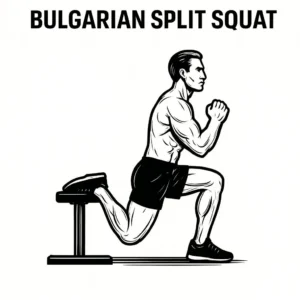
The Bulgarian split squat is a unilateral lower-body exercise where one foot stays planted firmly on the floor while the opposite foot is elevated behind you on a bench, box, or similar surface. As you lower your body, the front leg performs most of the work while the rear leg provides minimal assistance.
This movement closely mimics many activities you perform every day, including climbing stairs, running, lunging, and jumping. Because it trains each leg independently, it helps expose and correct strength imbalances that traditional squats often hide.
Many personal trainers include Bulgarian split squats in strength training programs because they effectively develop the quadriceps, glutes, hamstrings, calves, and core simultaneously. The exercise also improves coordination and mobility, making it valuable for both beginners and experienced lifters.
Although it is often associated with bodybuilding, the Bulgarian split squat is equally beneficial for runners, cyclists, basketball players, football players, and anyone looking to improve lower-body performance.
Why the Bulgarian Split Squat Is So Effective
One reason this exercise has become a staple in strength programs is its ability to challenge multiple fitness components at once. Rather than simply building muscle, it develops functional strength that transfers into sports and everyday movement.
Because most of your body weight shifts onto one leg, the muscles must generate greater force compared to traditional bodyweight squats. At the same time, your hips and core work continuously to prevent your body from tipping or rotating.
The elevated rear foot also allows for a deeper range of motion. This creates greater tension in the working muscles, leading to improved muscle development and flexibility over time.
Many people discover that Bulgarian split squats reveal weaknesses they never noticed during regular squats. One leg may feel noticeably stronger than the other, making this exercise an excellent tool for restoring muscular balance.
Muscles Worked During a Bulgarian Split Squat
One of the biggest advantages of the Bulgarian split squat is the number of muscles involved throughout the movement.
The quadriceps serve as the primary movers. Located on the front of the thigh, these muscles extend the knee as you stand back up. Because the exercise places significant emphasis on the front leg, the quadriceps receive an excellent strength-building stimulus.
The gluteus maximus works powerfully during the upward portion of the lift, helping extend the hip while providing stability throughout the movement. Strong glutes contribute to better posture, athletic performance, and reduced lower back discomfort.
The hamstrings assist by supporting hip extension and stabilizing the knee joint. Although they are not the primary muscles being targeted, they play an important supporting role.
Your calves help maintain balance throughout the exercise. Since you’re balancing on one leg, these muscles stay engaged almost continuously.
Perhaps one of the most overlooked benefits is core activation. Your abdominal muscles, obliques, and lower back must remain engaged throughout every repetition to keep your torso upright and prevent unwanted movement.
Together, these muscle groups make the Bulgarian split squat one of the most complete lower-body exercises available.
How to Do a Bulgarian Split Squat Correctly
Learning proper technique is far more important than lifting heavy weights. Mastering bodyweight repetitions first creates a strong foundation before progressing to dumbbells or barbells.
Begin by standing approximately two to three feet in front of a flat bench. Reach one leg behind you and place the top of your foot comfortably on the bench. Your front foot should remain flat on the floor with enough space that your knee stays aligned over your ankle throughout the movement.
Stand tall with your chest lifted, shoulders relaxed, and core engaged. Keep your gaze forward instead of looking down.
Slowly bend your front knee while allowing your back knee to travel toward the floor. Descend under control until your front thigh is nearly parallel with the ground or as low as your mobility comfortably allows.
Throughout the movement, keep your weight centered over your front heel and midfoot. Avoid pushing off the rear foot, as the front leg should perform most of the work.
Pause briefly at the bottom before driving through your front heel to return to the starting position. Fully extend your hip and knee without locking the joint aggressively at the top.
Complete all repetitions on one leg before switching sides.
The movement should feel smooth and controlled from beginning to end. Avoid rushing through repetitions or relying on momentum.
Breathing Technique
Proper breathing helps maintain stability and improves lifting performance.
Take a deep breath before lowering your body.
Hold gentle abdominal tension throughout the descent to stabilize your spine.
Exhale steadily as you press back to the starting position.
Developing proper breathing habits becomes especially important once heavier weights are introduced.
Common Bulgarian Split Squat Mistakes
Even experienced lifters occasionally make technical errors that reduce effectiveness or increase injury risk.
A common mistake is placing the front foot too close to the bench. This forces the knee excessively forward and limits proper hip movement. Positioning yourself slightly farther away usually creates a more comfortable and efficient movement pattern.
Another frequent error is leaning the torso excessively forward. While a slight natural lean is acceptable, collapsing over the front leg shifts unnecessary stress onto the lower back and reduces quadriceps activation.
Many beginners also rely too heavily on the rear foot for assistance. Remember that the elevated leg should provide balance rather than drive the movement.
Allowing the front knee to collapse inward is another issue. Keeping the knee aligned with the toes helps protect the joint while maintaining proper muscle recruitment.
Finally, rushing through repetitions decreases muscle tension and compromises balance. Performing each repetition slowly with full control produces better strength and muscle-building results.
Benefits of Bulgarian Split Squats
The Bulgarian split squat offers benefits that extend far beyond stronger legs.
One of its greatest advantages is improved muscular symmetry. Since each leg works independently, weaker muscles cannot rely on the stronger side to compensate. Over time, this leads to more balanced strength and better movement mechanics.
The exercise also develops exceptional balance and coordination. Your stabilizing muscles constantly adjust throughout every repetition, improving overall body control.
Athletes often use Bulgarian split squats to improve sprinting speed, jumping ability, and change-of-direction performance because many sports require force production from a single leg.
From a muscle-building perspective, the exercise creates significant tension across the quadriceps and glutes without requiring extremely heavy loads. This makes it ideal for individuals who want to increase muscle size while reducing spinal loading compared with heavy barbell squats.
Another important benefit is injury prevention. Strong hips, glutes, and stabilizing muscles improve joint control, which may reduce stress placed on the knees during athletic activities and everyday movement.
Finally, the Bulgarian split squat improves hip mobility and lower-body flexibility by encouraging movement through a larger range of motion, especially when performed consistently with proper technique.
Bulgarian Split Squat vs. Romanian Split Squat
Although the names are similar, the Bulgarian split squat and Romanian split squat are two distinct exercises that target the lower body in different ways. Understanding how they differ can help you choose the right movement based on your fitness goals.
The Bulgarian split squat is primarily a knee-dominant exercise. It emphasizes the quadriceps while also recruiting the glutes, hamstrings, calves, and core. Since the rear foot is elevated, the front leg performs nearly all of the work, making it highly effective for improving unilateral strength, stability, and balance.
The Romanian split squat, on the other hand, is a hip-dominant movement. Instead of focusing on knee flexion, it places greater emphasis on the hip hinge. This shifts more of the workload to the hamstrings and glutes, making it an excellent exercise for strengthening the posterior chain.
If your goal is to build stronger thighs, improve balance, and increase overall leg strength, the Bulgarian split squat is the better choice. If you want to target your hamstrings and glutes while improving hip mechanics, the Romanian split squat deserves a place in your training routine.
Many strength coaches recommend incorporating both exercises into a balanced lower-body program. Since they complement each other rather than compete, using both can help create well-rounded leg development.
Variations of the Bulgarian Split Squat
Try these variations to increase intensity or modify difficulty.
1. Bodyweight Bulgarian Split Squat
- Best for beginners.
- Focuses on balance and form.
2. Dumbbell Bulgarian Split Squat
- Adds resistance for muscle growth.
- Engages stabilizers more effectively.
3. Smith Machine Bulgarian Split Squat
- Provides stability for heavier lifts.
- Reduces balance challenges.
Final Tips for Better Results
Success with the Bulgarian split squat comes down to consistency and attention to detail. Spend time mastering your setup before worrying about increasing resistance. Keep every repetition slow and controlled, maintain an engaged core, and focus on driving through the front foot rather than relying on the elevated leg.
Don’t be discouraged if the exercise feels challenging at first. Balance and stability improve quickly with regular practice, and the strength gains are well worth the effort. Recording your form occasionally or training in front of a mirror can also help identify small adjustments that lead to better technique.
Finally, include Bulgarian split squats as part of a balanced lower-body routine alongside complementary exercises such as traditional squats, Romanian deadlifts, hip thrusts, and lunges. This combination promotes comprehensive leg development while reducing muscular imbalances.
Conclusion
The Bulgarian split squat is one of the most effective lower-body exercises for building strength, improving balance, and developing athletic performance. By challenging each leg independently, it helps eliminate muscular imbalances, increases core stability, and promotes functional movement that carries over into sports and everyday activities.
While the exercise may seem demanding at first, mastering proper Bulgarian split squat form will reward you with stronger quadriceps, glutes, hamstrings, and stabilizing muscles. Whether you perform it using only your body weight or progress to heavier dumbbells and barbells, maintaining control and proper technique should always remain your top priority.
If you’re looking for a single exercise that delivers exceptional results for strength, muscle growth, and overall lower-body performance, the Bulgarian split squat deserves a permanent place in your workout routine. With consistent practice and gradual progression, it can become one of the most valuable movements in your fitness program.
Last Updated on July 23, 2026
Written By

Join thousands of readers leveling up their fitness.
Skip the guesswork—get insights on training, health, and the right gear to support your progress.
You may also like
How To Do A Lat Pulldown Correctly
The lat pulldown is one of the best exercises for building a wider, stronger…
10 Different Types Of Deadlifts And Their Benefits
The deadlift is one of the most powerful compound exercises for building…
How to Strengthen Your Knees for Running
Strong, healthy knees are essential for runners, whether you’re logging miles…
Compound vs. Isolation Exercises: What’s the Difference?
When it comes to strength training, all exercises can generally be divided into…
Back Squat Exercise Guide: How to Master Back Squats
The back squat is one of the most effective strength training exercises for…
10 Medicine Ball Ab Exercises You Need To Try
If you’re tired of traditional crunches and planks, it’s time to add some…