

Building a strong, well-developed back requires more than pull-ups and lat pulldowns. One of the most effective exercises for developing overall back thickness, improving pulling strength, and enhancing posture is the barbell row. Often referred to as the bent-over barbell row, this compound movement has remained a staple in strength training programs for decades because of its ability to target multiple muscle groups with a single exercise.
Despite its popularity, the barbell row is also one of the most commonly performed exercises with poor technique. Many lifters rely on momentum, round their backs, or pull the bar incorrectly, reducing the exercise’s effectiveness and increasing the risk of injury. Mastering proper form is essential if you want to maximize muscle growth while protecting your lower back and shoulders.
Whether you’re new to weightlifting or looking to refine your technique, understanding how to perform barbell rows correctly can significantly improve your upper-body strength. This guide explains the movement in detail, including proper setup, common mistakes, muscles worked, training tips, and variations that can help you get the most from every repetition.
What Is a Barbell Row?
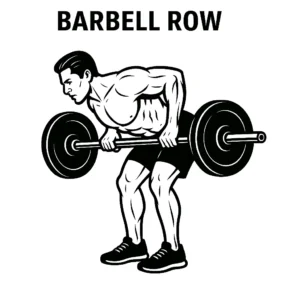
A barbell row is a compound pulling exercise performed by hinging at the hips while pulling a loaded barbell toward your torso. Unlike isolation exercises that target a single muscle, the barbell row recruits multiple muscles across your back, shoulders, arms, and core simultaneously.
Because you must maintain a stable bent-over position while moving the weight, the exercise also challenges your balance, posture, and spinal stability. This makes it one of the most effective movements for developing functional strength that transfers to other compound lifts such as deadlifts, pull-ups, and Olympic lifts.
The barbell row is commonly included in bodybuilding, powerlifting, CrossFit, and athletic performance programs because it builds both muscle size and pulling power.
Benefits of Barbell Rows
The barbell row offers much more than simply building a bigger back. It strengthens nearly every muscle involved in pulling while improving posture and supporting better performance in many other exercises.
One of its greatest advantages is the ability to develop overall back thickness. The movement heavily targets the latissimus dorsi, rhomboids, and trapezius muscles, helping create a wider and more muscular upper body.
Another major benefit is improved posture. Many people spend hours sitting at desks or looking down at electronic devices, leading to rounded shoulders and weakened upper-back muscles. Regular barbell rows strengthen the muscles responsible for pulling the shoulders back, helping improve posture over time.
Grip strength also improves naturally through barbell rows. Since you must maintain control of the bar throughout every repetition, your hands and forearms receive continuous training without requiring separate grip exercises.
Barbell rows also contribute to stronger compound lifts. A powerful upper back provides greater stability during squats, deadlifts, bench presses, and overhead presses. Many experienced strength coaches consider rowing movements essential for maintaining balanced upper-body development and reducing the risk of muscular imbalances.
How to Perform a Barbell Row With Proper Form
Success begins before you pull the bar from the floor.
Stand with your feet approximately shoulder-width apart and position the barbell over the middle of your feet. Grip the bar slightly wider than shoulder width using an overhand grip.
Lift the bar by extending your hips and knees until you are standing upright. From this position, hinge at your hips by pushing them backward while maintaining a slight bend in your knees. Lower your torso until it reaches approximately a 45-degree angle to the floor, or slightly lower if your mobility allows.
Keep your chest lifted, shoulders pulled back, and spine in a neutral position throughout the movement. Avoid rounding your back or allowing your shoulders to collapse forward.
Brace your core by taking a deep breath into your abdomen before initiating the pull.
Drive your elbows backward while pulling the bar toward your lower ribs or upper abdomen. Focus on leading with your elbows rather than simply lifting with your hands. As the bar reaches your body, squeeze your shoulder blades together without shrugging your shoulders.
Pause briefly before lowering the bar under control until your arms are fully extended.
Every repetition should be smooth and controlled. Avoid bouncing the weight or relying on momentum to complete the movement.
Breathing and Bracing
Proper breathing plays a major role in maintaining spinal stability during barbell rows.
Before beginning each repetition, inhale deeply through your nose and brace your abdominal muscles. This creates intra-abdominal pressure that supports your lower back throughout the lift.
Maintain this brace as you pull the bar toward your body. Exhale gradually after completing the repetition while keeping your torso stable.
Developing consistent breathing habits becomes increasingly important as training loads become heavier.
Choosing the Right Grip
Your grip influences both comfort and muscle activation during barbell rows.
A standard overhand grip is the most commonly used option because it evenly distributes the workload across the upper back and rear shoulders.
An underhand grip shifts slightly more emphasis toward the lower lats and biceps while allowing some lifters to achieve a greater range of motion.
Grip width also matters. A shoulder-width grip generally provides the best balance between strength and muscle activation. Extremely wide or narrow grips often reduce efficiency and may place unnecessary stress on the wrists or shoulders.
Muscles Worked During a Barbell Row
The barbell row is one of the few exercises that effectively trains several major muscle groups at once.
The latissimus dorsi, commonly known as the lats, serves as the primary pulling muscle and helps create the wide appearance many lifters strive for.
The trapezius and rhomboids stabilize the shoulder blades while producing a strong contraction at the top of each repetition. These muscles play a significant role in maintaining healthy posture.
Your rear deltoids assist during the pulling motion, contributing to stronger and more balanced shoulders.
The biceps and brachialis work throughout the exercise as secondary muscles responsible for elbow flexion.
Your spinal erectors, glutes, and hamstrings work isometrically to maintain the bent-over position, while the core muscles stabilize the torso and protect the spine throughout the lift.
Rather than isolating one muscle, the barbell row develops coordinated strength across the entire posterior chain, making it one of the most efficient upper-body exercises available.
Common Barbell Row Mistakes and How to Fix Them
Even though the barbell row appears straightforward, small technical mistakes can significantly reduce its effectiveness. More importantly, poor form increases stress on the lower back and shoulders, limiting your progress and increasing the risk of injury.
One of the most common mistakes is rounding the lower back. This usually happens when the weight is too heavy or when the lifter lacks the mobility and core strength to maintain a neutral spine. Instead of allowing your back to curve, keep your chest lifted, engage your core, and maintain a straight line from your head to your hips throughout the movement. If you cannot hold this position, reduce the weight until your technique improves.
Another frequent mistake is using momentum instead of muscular control. Swinging your torso or jerking the bar upward may allow you to lift more weight, but it shifts tension away from your back muscles. The purpose of the exercise is to strengthen your pulling muscles, not to move the heaviest weight possible. Every repetition should begin and end under complete control.
Many lifters also pull the bar too high toward the chest. This changes the movement pattern and often causes the shoulders to shrug excessively. Instead, aim to pull the bar toward your lower ribs or upper abdomen while driving your elbows behind your body.
Standing too upright is another issue that reduces the effectiveness of the exercise. When your torso becomes nearly vertical, the movement resembles a shrug rather than a rowing exercise. Maintaining a consistent hip hinge keeps tension on the lats, rhomboids, and rear deltoids where it belongs.
Finally, avoid looking upward throughout the exercise. Keep your neck in a neutral position by focusing your eyes a few feet in front of you on the floor. This helps maintain proper spinal alignment from your head to your hips.
Barbell Row Variations
Once you’ve mastered the traditional movement, adding variations can help overcome plateaus while targeting your muscles from different angles.
The underhand barbell row shifts more emphasis toward the lower lats and biceps while allowing some lifters to achieve a stronger contraction.
The Yates row, named after bodybuilding legend Dorian Yates, uses a slightly more upright torso and an underhand grip. This variation often feels more comfortable for individuals with lower back limitations.
The T-bar row allows heavier loading while reducing the demands placed on spinal stabilization. It is an excellent alternative for those looking to increase back thickness.
Seal rows remove momentum entirely by supporting your chest on a bench. This isolates the upper back and encourages strict pulling mechanics.
Rotating these variations throughout the year can help maintain training variety while preventing adaptation.
Accessory Exercises That Improve Your Barbell Row
Although the barbell row is one of the best compound pulling exercises, several accessory movements can help you improve your technique, strengthen weak points, and continue progressing over time.
One of the most effective supporting exercises is the face pull. This movement strengthens the rear deltoids, rhomboids, and rotator cuff muscles, all of which contribute to better shoulder stability during rowing movements. Including face pulls once or twice each week can also help offset the effects of prolonged sitting and poor posture.
Pull-ups and lat pulldowns are excellent for increasing lat strength. Since the lats are one of the primary muscles involved in the barbell row, improving their strength often leads to better rowing performance and increased pulling power.
Romanian deadlifts are another valuable addition to your training program. Maintaining the bent-over position during a barbell row requires a strong posterior chain, particularly the hamstrings, glutes, and spinal erectors. Romanian deadlifts strengthen these muscles while reinforcing proper hip hinge mechanics.
Chest-supported rows are also worth considering, especially if lower back fatigue limits your performance. Because your chest rests against a bench, you can focus entirely on squeezing the back muscles without worrying about maintaining your torso position.
Finally, grip training should not be overlooked. Exercises such as farmer’s carries, dead hangs, and plate pinch holds strengthen the forearms and hands, allowing you to maintain a secure grip during heavy rowing sessions.
Sample Barbell Row Workout
A balanced back workout should include both horizontal and vertical pulling movements to ensure complete muscular development.
An example workout could include:
- Barbell Rows: 4 sets of 6 to 8 repetitions
- Pull-Ups or Lat Pulldowns: 3 sets of 8 to 12 repetitions
- Chest-Supported Rows: 3 sets of 10 to 12 repetitions
- Face Pulls: 3 sets of 12 to 15 repetitions
- Farmer’s Carries: 3 rounds of 30 to 40 seconds
This combination develops overall back thickness, upper-back stability, grip strength, and muscular endurance without placing excessive stress on a single movement pattern.
Remember that quality always outweighs quantity. Focus on performing each repetition with excellent technique rather than rushing through your workout.
Final Thoughts
The barbell row has earned its reputation as one of the most effective compound exercises for building a stronger, thicker, and more functional back. Unlike many isolation movements, it develops multiple muscle groups simultaneously while improving posture, grip strength, and overall pulling power.
Success with the barbell row depends on quality rather than quantity. Maintaining a neutral spine, controlling every repetition, and focusing on proper muscle engagement will produce far better results than simply lifting heavier weights with poor form. Small improvements in technique made consistently over time often lead to significant gains in strength and muscle development.
Whether your goal is increasing athletic performance, building muscle, improving posture, or supporting other major lifts, the barbell row deserves a permanent place in your training program. Combined with progressive overload, smart programming, proper recovery, and attention to technique, this timeless exercise can help you develop a stronger, healthier, and more balanced upper body.
Last Updated on August 4, 2026
Written By

Join thousands of readers leveling up their fitness.
Skip the guesswork—get insights on training, health, and the right gear to support your progress.
You may also like
How To Do A Lat Pulldown Correctly
The lat pulldown is one of the best exercises for building a wider, stronger…

10 Different Types Of Deadlifts And Their Benefits
The deadlift is one of the most powerful compound exercises for building…

How to Strengthen Your Knees for Running
Strong, healthy knees are essential for runners, whether you’re logging miles…

Compound vs. Isolation Exercises: What’s the Difference?
When it comes to strength training, all exercises can generally be divided into…
Back Squat Exercise Guide: How to Master Back Squats
The back squat is one of the most effective strength training exercises for…

10 Medicine Ball Ab Exercises You Need To Try
If you’re tired of traditional crunches and planks, it’s time to add some…