

If you’re tired of traditional crunches and planks, it’s time to add some variety and intensity to your core workouts. A medicine ball is one of the most effective tools for strengthening your abs, improving balance, and enhancing coordination.
These medicine ball ab exercises will help you build a stronger, more defined core while engaging your entire body for functional strength and stability.
Why Use a Medicine Ball for Core Training?
Medicine balls are dynamic training tools that add resistance and power to your workouts. They challenge your core muscles to stabilize during movement — mimicking real-life athletic motions.
Benefits include:
- Builds core strength and definition
- Improves stability and balance
- Enhances power and coordination
- Adds versatility to ab workouts
- Increases explosiveness for sports performance
1. Medicine Ball Russian Twist
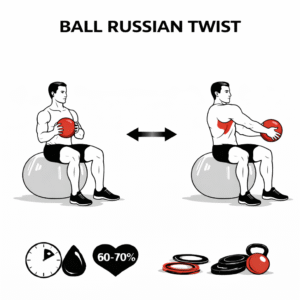
A classic move for targeting your obliques and rotational core strength.
How to do it:
- Sit on the floor with your knees bent and feet slightly off the ground.
- Hold the medicine ball with both hands at chest level.
- Rotate your torso from side to side, tapping the ball on the floor each time.
Pro Tip:
Keep your back straight and core tight. For beginners, keep your feet on the floor.
2. Overhead Sit-Up
This variation builds strength through your upper and lower abs while improving shoulder stability.
How to do it:
- Lie flat with knees bent and feet on the floor.
- Hold the medicine ball above your chest.
- Engage your core and sit up while keeping the ball overhead.
- Slowly lower back down.
Pro Tip:
Keep your arms extended and avoid using momentum to lift your torso.
3. Medicine Ball Slam
An explosive full-body exercise that develops power and engages your abs intensely.
How to do it:
- Stand with your feet shoulder-width apart, holding the ball overhead.
- Slam the ball forcefully into the ground while contracting your core.
- Catch or pick it up and repeat.
Pro Tip:
Use a non-bouncing medicine ball to stay in control of each slam.
4. Plank Roll-Out
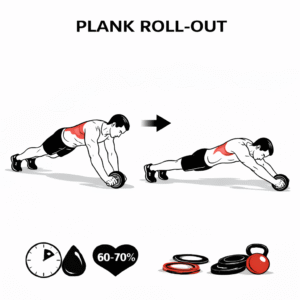
This move challenges your core stability and shoulder strength simultaneously.
How to do it:
- Get into a plank position with your forearms resting on the medicine ball.
- Slowly roll the ball forward, extending your arms.
- Pull it back to the starting position using your core muscles.
Pro Tip:
Keep your hips steady, don’t let them sag or rotate.
5. Medicine Ball Leg Raise
Targets the lower abs and improves control and coordination.
How to do it:
- Lie flat with the medicine ball held between your feet.
- Keep your legs straight and lift them toward the ceiling.
- Slowly lower them without letting the ball touch the ground.
Pro Tip:
Keep your lower back pressed into the floor to avoid strain.
6. V-Up with Medicine Ball
A total-core movement that strengthens your upper and lower abs together.
How to do it:
- Lie flat, holding the medicine ball above your head.
- Lift your legs and upper body simultaneously to form a “V.”
- Touch the ball to your feet, then slowly lower down.
Pro Tip:
Move slowly and focus on the contraction rather than speed.
7. Wall Throw
This dynamic exercise enhances power and functional strength.
How to do it:
- Stand facing a wall, holding the medicine ball at your chest.
- Rotate your torso and throw the ball against the wall.
- Catch it and immediately twist to the other side.
Pro Tip:
Engage your hips and core for explosive rotational power.
8. Medicine Ball Plank Pass
A great move for core stability and coordination.
How to do it:
- Get into a high plank position with the medicine ball under one hand.
- Roll or pass the ball to the opposite hand while keeping your body still.
- Alternate sides for the desired number of reps.
Pro Tip:
Keep your hips square and avoid rocking side to side.
9. Standing Woodchopper
A functional movement that mimics athletic motions and targets the obliques.
How to do it:
- Stand with your feet shoulder-width apart, holding the ball above one shoulder.
- Rotate your torso and bring the ball diagonally across your body toward your opposite knee.
- Return to the start and repeat on both sides.
Pro Tip:
Engage your core throughout the twist — don’t just use your arms.
10. Reverse Lunge with Twist
Combines lower-body strength with rotational core engagement.
How to do it:
- Hold the medicine ball at chest height.
- Step back into a lunge while twisting your torso toward the front leg.
- Return to standing and alternate legs.
Pro Tip:
Maintain balance and control, avoid over-rotating.
Final Thoughts
These medicine ball core exercises challenge your abs in new and dynamic ways. Incorporate 3–4 of these movements into your routine 2–3 times per week for noticeable improvements in strength, definition, and performance.
Remember: focus on form and control. The medicine ball adds resistance, but your core is what powers every move.
Written By

Join thousands of readers leveling up their fitness.
Skip the guesswork—get insights on training, health, and the right gear to support your progress.
You may also like

How To Do A Lat Pulldown Correctly
The lat pulldown is one of the best exercises for building a wider, stronger…

10 Different Types Of Deadlifts And Their Benefits
The deadlift is one of the most powerful compound exercises for building…

How to Strengthen Your Knees for Running
Strong, healthy knees are essential for runners, whether you’re logging miles…

Compound vs. Isolation Exercises: What’s the Difference?
When it comes to strength training, all exercises can generally be divided into…

Back Squat Exercise Guide: How to Master Back Squats
The back squat is one of the most effective strength training exercises for…
10 Best Back Stretches To Improve Back Flexibility
A flexible back doesn’t just look good — it’s essential for better posture,…