

The front squat is one of the most effective lower-body exercises for building strength, improving posture, and developing athletic performance. While it is often compared to the traditional back squat, the front squat offers unique benefits by placing the barbell across the front of the shoulders. This position forces your core, upper back, and legs to work together throughout the movement, making it an excellent exercise for improving full-body strength and movement quality.
Unlike many machine-based exercises that isolate individual muscles, the front squat challenges multiple muscle groups at the same time. It strengthens the quadriceps, glutes, hamstrings, core, upper back, and even your grip and shoulder mobility. Because of this, the exercise is widely used by athletes, Olympic weightlifters, CrossFit competitors, and recreational gym-goers looking to improve overall fitness.
Learning proper front squat form is essential before increasing the weight on the bar. Good technique not only helps you lift more efficiently but also reduces unnecessary stress on your knees, hips, wrists, and lower back. Whether your goal is building muscle, increasing strength, or improving athletic performance, mastering the fundamentals will allow you to get the most from every repetition.
This guide explains everything you need to know, including proper technique, muscles worked, common mistakes, programming recommendations, and practical tips to help you perform front squats safely and confidently.
What Is a Front Squat?
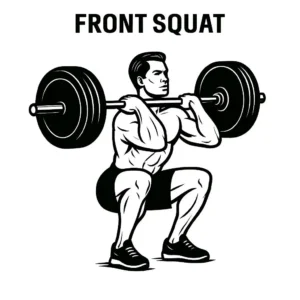
A front squat is a compound lower-body exercise performed by placing a barbell across the front of the shoulders while keeping the elbows lifted high throughout the movement. Unlike a back squat, where the weight rests on the upper back, the front-loaded position naturally encourages a more upright torso. This shift changes how your body distributes the load and places greater emphasis on the quadriceps and core muscles.
Although the movement may initially feel more challenging because of the front rack position, many lifters discover that it improves their overall squat mechanics. Maintaining an upright posture encourages better spinal alignment while reducing excessive forward lean, which can place additional stress on the lower back during heavy lifting.
Front squats are also considered one of the foundational exercises in Olympic weightlifting because they closely mimic the receiving position of the clean. Even if you never compete in Olympic lifting, practicing front squats can improve balance, mobility, coordination, and lower-body strength that carries over into many other exercises and sports.
Muscles Worked During a Front Squat
The front squat is a true compound exercise because multiple muscle groups work together to complete each repetition.
The quadriceps serve as the primary movers throughout the lift. They control the descent and generate the force necessary to extend the knees during the ascent.
The gluteus maximus contributes significant power as you drive upward from the bottom position, helping extend the hips while maintaining stability.
The hamstrings support hip stability and assist with controlling movement even though they are not the primary muscle group responsible for lifting the weight.
Your abdominal muscles and obliques remain under constant tension to keep the torso upright. Without strong core engagement, the barbell will naturally pull your body forward.
The erector spinae muscles stabilize your spine throughout the movement, while the upper back muscles, including the trapezius and rhomboids, help create a stable platform for supporting the barbell.
Even your calves contribute by stabilizing your ankles throughout the lift, especially when performing deep squats.
A Proper Warm-Up Before Front Squats
An effective warm-up prepares your muscles and joints for heavy lifting while reducing the likelihood of injury.
Begin with five to ten minutes of light cardiovascular activity such as brisk walking, cycling, or rowing to increase body temperature.
Next, perform dynamic mobility exercises focusing on the ankles, hips, shoulders, and thoracic spine. Walking lunges, leg swings, bodyweight squats, and shoulder mobility drills are all excellent choices.
Finish your warm-up by performing several progressively heavier front squat sets before reaching your working weight. Starting with an empty barbell allows you to reinforce proper movement patterns while preparing your nervous system for heavier loads.
A thorough warm-up may only take ten to fifteen minutes, but it can significantly improve both performance and movement quality.
How to Do a Front Squat With Proper Form
Proper execution begins before you even unrack the barbell.
Start by positioning the bar at approximately shoulder height inside a squat rack. Step underneath the bar and allow it to rest securely across the front of your shoulders rather than in your hands. The bar should sit comfortably on the shelf created by your front deltoids and collarbones.
Raise your elbows until your upper arms are almost parallel to the floor. This creates the stable platform necessary for supporting the barbell throughout the lift. Your fingertips may lightly support the bar, but your shoulders should carry most of the weight.
Once you’ve unracked the bar, take two controlled steps backward and position your feet roughly shoulder-width apart with your toes turned slightly outward. Find a balanced stance before beginning the movement.
Take a deep breath into your abdomen and brace your core as if preparing to absorb a punch. Keep your chest tall, eyes focused straight ahead, and elbows pointed forward.
Begin lowering yourself by bending your knees and hips simultaneously. Imagine sitting directly between your heels rather than pushing your hips excessively backward. Maintain an upright torso while allowing your knees to naturally track over your toes.
Continue descending until your thighs reach at least parallel to the floor. If your mobility allows, you may squat deeper while maintaining proper spinal alignment.
Pause briefly at the bottom without relaxing your muscles.
Drive through your entire foot while pushing the floor away from you. Extend your knees and hips together until you return to the starting position.
Throughout the entire repetition, keep your elbows lifted. Dropping them allows the barbell to roll forward, making the lift less stable and increasing the likelihood of losing proper form.
Avoid rushing through repetitions. Controlled movement produces better muscle activation while reinforcing proper technique.
Front Squat vs. Back Squat
The front squat and back squat are both outstanding compound exercises, but each serves a slightly different purpose within a training program. Understanding their differences can help you choose the right variation based on your goals.
The most noticeable difference is the position of the barbell. During a front squat, the bar rests across the front of your shoulders, while the back squat places the bar on your upper back. This simple change dramatically affects how your body moves throughout the exercise.
The front squat naturally encourages a more upright torso. Because of this, your quadriceps and core perform a larger share of the work. The back squat, on the other hand, allows for a greater forward lean, increasing the involvement of the glutes, hamstrings, and lower back.
Most people can lift heavier weights during back squats because the bar position provides a more mechanically advantageous leverage point. Front squats generally require lighter loads but demand greater stability, balance, and mobility.
If your primary goal is building maximum lower-body strength, both exercises deserve a place in your program. Back squats remain one of the best choices for developing total-body strength and power, while front squats excel at improving posture, quadriceps development, and core stability.
Athletes often include both variations during different phases of training to maximize performance while reducing overuse from relying on a single movement pattern.
Which Exercise Is Better?
There isn’t a universal winner.
Choose front squats if your goals include:
- Building stronger quadriceps
- Improving posture
- Increasing core strength
- Developing Olympic lifting performance
- Reducing stress on the lower back
Choose back squats if your goals include:
- Lifting maximum weight
- Developing posterior chain strength
- Building overall lower-body mass
- Improving powerlifting performance
Many strength coaches recommend alternating between both exercises rather than replacing one with the other.
Mobility Requirements for Front Squats
One reason many beginners struggle with front squats is limited mobility rather than a lack of strength.
The exercise requires several joints to move freely at the same time. Restrictions in any of these areas can affect your technique.
Ankle Mobility
Limited ankle flexibility prevents the knees from moving forward naturally during the descent. As a result, many lifters compensate by leaning forward or lifting their heels.
Simple calf stretches, ankle rocks, and deep bodyweight squats can gradually improve ankle mobility.
Hip Mobility
Tight hips often reduce squat depth and make it difficult to maintain an upright torso.
Dynamic warm-ups that include hip openers, lunges, and deep squat holds prepare the hips for heavy lifting.
Thoracic Spine Mobility
Your upper back must remain extended to support the front rack position.
Exercises such as foam rolling, thoracic extensions, and band pull-aparts improve upper-back mobility while promoting better posture.
Wrist and Shoulder Mobility
The clean grip demands flexibility in both the wrists and shoulders.
If these areas feel tight, spend several minutes before each workout performing wrist stretches, shoulder dislocations with a resistance band, and front rack mobility drills.
Remember that mobility improves gradually through consistent practice rather than forcing uncomfortable positions.
Front Squat Variations
Once you’ve mastered the standard front squat, several variations can help address weaknesses, increase training variety, or accommodate different experience levels.
Dumbbell Front Squat
The dumbbell front squat is an excellent alternative for beginners or anyone without access to a barbell.
Holding a dumbbell in each hand at shoulder height reduces the mobility demands while still strengthening the quadriceps and core. It also helps improve balance and coordination.
Goblet Squat
The goblet squat is often the first squat variation taught to beginners.
Holding a kettlebell or dumbbell against your chest naturally encourages good posture while reinforcing proper squat mechanics.
Many coaches use goblet squats before introducing barbell front squats because they teach similar movement patterns.
Paused Front Squat
Adding a two to three-second pause at the bottom removes momentum from the exercise.
This variation improves stability, strengthens sticking points, and develops greater control throughout the movement.
Athletes frequently include paused front squats during strength-focused training cycles.
Front Box Squat
Using a box provides a consistent depth target while reinforcing proper mechanics.
Beginners often gain confidence with this variation because it encourages controlled movement and helps eliminate inconsistent squat depth.
Common Front Squat Mistakes and How to Fix Them
Even experienced lifters occasionally develop poor front squat habits that limit performance or increase the risk of injury. Paying attention to technique is often more beneficial than simply adding weight to the bar. Identifying and correcting these common mistakes will help you build strength safely while getting more out of every workout.
Letting Your Elbows Drop
One of the most common mistakes is allowing your elbows to fall during the descent. When this happens, the barbell begins to roll forward, forcing your torso to lean and placing unnecessary stress on your lower back.
Keeping your elbows high throughout the lift creates a stable shelf for the bar and helps maintain an upright chest. If you struggle to keep your elbows elevated, improving shoulder, wrist, and upper back mobility should become part of your warm-up routine.
Leaning Too Far Forward
Although a slight forward lean is natural, excessive leaning usually indicates poor positioning or insufficient core strength.
Many lifters compensate by hinging at the hips instead of sitting into the squat. This reduces quadriceps activation and shifts much of the workload to the lower back.
Focus on keeping your chest proud, your eyes looking forward, and your core braced throughout the entire movement.
Lifting Your Heels Off the Floor
Your heels should remain firmly planted from start to finish. Rising onto your toes often signals limited ankle mobility or poor balance.
Practicing ankle mobility drills and wearing weightlifting shoes with an elevated heel can improve your squat depth while helping maintain proper foot contact.
Imagine pushing evenly through your entire foot instead of just your toes or heels.
Using Too Much Weight Too Soon
Many lifters attempt to front squat the same weight they use for back squats. Because the front rack position requires greater mobility and stability, this usually leads to compromised technique.
Master the movement with lighter loads first. Once you can consistently perform each repetition with excellent form, gradually increase the weight over time.
Losing Core Tension
Relaxing your core at the bottom of the squat often causes the torso to collapse forward.
Before every repetition, take a deep breath, brace your abdominal muscles, and maintain that tension until you’ve passed the most difficult portion of the lift.
A strong brace protects your spine while allowing you to generate more power.
Why Front Squats Should Be Part of Your Training Program
Many people automatically choose back squats when training their legs, but adding front squats to your routine provides several unique advantages that can improve your overall performance.
One of the biggest benefits is increased quadriceps activation. Since the torso remains more upright, the knees travel slightly farther forward during the descent, allowing the quadriceps to work through a greater range of motion. This makes front squats particularly valuable for individuals looking to develop stronger, more defined thighs.
The exercise also demands exceptional core stability. Because the weight sits in front of your body, your abdominal muscles, obliques, and spinal stabilizers must remain engaged throughout every repetition to prevent your torso from collapsing forward. Over time, this improves core strength that carries over into deadlifts, overhead presses, running, jumping, and many athletic movements.
Another advantage is improved posture. The front rack position encourages your chest to stay lifted while your upper back remains tight. This promotes better spinal alignment and helps strengthen the muscles responsible for maintaining good posture throughout daily activities.
Many lifters also find that front squats place less compressive stress on the lower back compared to back squats. Although both exercises require proper technique, the front squat’s upright position often feels more comfortable for individuals who experience lower back discomfort during heavy squatting.
The movement also develops mobility. Successfully performing a deep front squat requires adequate ankle flexibility, hip mobility, thoracic spine extension, shoulder mobility, and wrist flexibility. Practicing the exercise consistently helps improve these areas over time.
Final Thoughts
The front squat is much more than a variation of the traditional squat. It is a highly effective compound exercise that builds lower-body strength, develops a stronger core, improves posture, and enhances overall athletic performance. Because the weight is positioned at the front of the body, every repetition challenges your balance, stability, and movement quality in ways that transfer well to sports and everyday activities.
Mastering the front squat takes patience and consistent practice. Focus on developing proper technique before increasing the weight, paying close attention to your posture, elbow position, and core engagement. Small improvements in mobility and form will often lead to greater long-term progress than rushing to lift heavier loads.
Whether your goal is building stronger legs, increasing muscle mass, improving athletic ability, or simply becoming a more efficient mover, the front squat deserves a place in your training program. Combined with progressive overload, proper recovery, and consistent practice, it can become one of the most valuable exercises in your strength-training routine.
Last Updated on August 4, 2026
Written By

Join thousands of readers leveling up their fitness.
Skip the guesswork—get insights on training, health, and the right gear to support your progress.
You may also like
How To Do A Lat Pulldown Correctly
The lat pulldown is one of the best exercises for building a wider, stronger…
10 Different Types Of Deadlifts And Their Benefits
The deadlift is one of the most powerful compound exercises for building…

How to Strengthen Your Knees for Running
Strong, healthy knees are essential for runners, whether you’re logging miles…
Compound vs. Isolation Exercises: What’s the Difference?
When it comes to strength training, all exercises can generally be divided into…
Back Squat Exercise Guide: How to Master Back Squats
The back squat is one of the most effective strength training exercises for…
10 Medicine Ball Ab Exercises You Need To Try
If you’re tired of traditional crunches and planks, it’s time to add some…