

Tight hamstrings are one of the most common causes of poor flexibility, limited movement, and discomfort during everyday activities. Whether you spend most of your day sitting at a desk, enjoy running on weekends, lift weights regularly, or simply want to move more comfortably, your hamstrings play a much bigger role than you might think.
The hamstrings are a group of three muscles located along the back of your thighs. These muscles help bend your knees, extend your hips, stabilize your pelvis, and support nearly every movement involving your lower body. When they become tight, they can restrict your range of motion, alter your posture, and place additional stress on your hips, knees, and lower back.
Many people ignore hamstring flexibility until pain or stiffness begins to interfere with daily life. You might notice difficulty bending over to tie your shoes, discomfort after sitting for long periods, or increased soreness after exercise. These are all common signs that your hamstrings need attention.
The good news is that improving flexibility does not require expensive equipment or complicated workout routines. A consistent hamstring stretching routine can gradually reduce muscle tightness, improve mobility, and help your body move more efficiently. Even spending just a few minutes stretching several times a week can make a noticeable difference.
In this guide, you’ll learn why hamstring flexibility matters, how to stretch your hamstrings safely, and five of the most effective hamstring stretch exercises that can be incorporated into almost any fitness routine. Whether you’re a beginner or an experienced athlete, these stretches can help you move with greater comfort and confidence.
Why Hamstring Flexibility Is So Important
Hamstrings naturally tighten over time due to inactivity, repetitive movements, aging, and prolonged sitting. Modern lifestyles have made this even more common. Many people spend eight or more hours each day seated at work, driving, or relaxing at home. During these long periods of sitting, the hamstrings remain in a shortened position, gradually becoming less flexible.
Without regular stretching, tight hamstrings begin to affect much more than just your legs. They influence the alignment of your pelvis, alter your walking mechanics, and can contribute to chronic muscle tension throughout the lower body.
Improving flexibility allows your muscles to lengthen properly during movement. This reduces unnecessary strain on nearby joints while helping your body maintain better balance and posture. Flexible hamstrings also make everyday tasks feel easier, whether you’re climbing stairs, lifting groceries, exercising, or simply getting out of bed in the morning.
Athletes often prioritize hamstring stretching because these muscles generate power during running, jumping, sprinting, cycling, and many strength-training exercises. However, flexibility is equally valuable for individuals who are not highly active. Maintaining healthy hamstrings supports better mobility throughout every stage of life.
How to Stretch Your Hamstrings Safely
Before beginning any hamstring stretch, it’s important to prepare your muscles properly. Stretching cold muscles can increase discomfort and reduce the effectiveness of the exercise. A brief warm-up lasting five to ten minutes helps increase blood circulation and prepares the muscles for movement.
Simple activities such as brisk walking, light cycling, or marching in place are excellent ways to warm up.
As you stretch, focus on hinging from your hips rather than rounding your back. Many people mistakenly bend through the spine, which reduces the effectiveness of the stretch and places unnecessary strain on the lower back.
You should feel gentle tension along the back of your thigh, but never sharp pain. Stretching should feel controlled and comfortable. If the stretch becomes painful, ease back slightly until the tension feels manageable.
Breathing is equally important. Slow, steady breaths encourage the muscles to relax naturally, allowing you to gradually deepen the stretch without forcing your body into uncomfortable positions.
Remember that flexibility develops over time. Avoid bouncing or forcing yourself beyond your current range of motion. Consistency always produces better results than aggressive stretching sessions.
Best Hamstring Stretch Exercises
The following hamstring stretch exercises are suitable for most people and require little to no equipment. Perform each stretch slowly, paying attention to your body’s limits rather than trying to achieve the deepest stretch possible. As your flexibility improves, you will naturally gain a greater range of motion.
1. Standing Hamstring Stretch
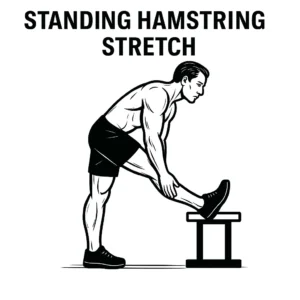
The standing hamstring stretch is one of the easiest and most effective ways to improve flexibility in the back of your thighs. Because it requires only a stable surface such as a bench, step, or low chair, it can be performed almost anywhere, making it an excellent choice for home, the gym, or even the office.
This stretch targets the entire hamstring muscle group while also promoting better posture and hip mobility. It is particularly beneficial for people who spend long hours sitting, as it helps counteract the muscle tightness that develops throughout the day.
To perform the stretch, stand upright with your feet hip-width apart. Place the heel of one foot on a stable surface that is slightly lower than hip height. Keep your standing leg slightly bent to maintain balance.
Instead of bending through your back, hinge forward from your hips while keeping your chest lifted and your spine neutral. Continue leaning until you feel a comfortable stretch along the back of your raised leg. Avoid locking your knee completely, as a slight bend helps reduce unnecessary joint stress.
Hold the position for 20 to 30 seconds while breathing slowly and evenly. Return to the starting position and repeat on the opposite side. Complete two or three rounds for each leg.
Many people make the mistake of reaching for their toes by rounding their shoulders and back. This reduces the effectiveness of the stretch and increases strain on the spine. Focus on moving from your hips rather than your upper body.
If your hamstrings are especially tight, use a lower surface until your flexibility improves.
2. Seated Hamstring Stretch
The seated hamstring stretch offers excellent control, making it one of the safest options for beginners, older adults, and individuals recovering from mild muscle tightness. Since your body is supported by the floor, it is easier to maintain proper posture throughout the movement.
Sit comfortably on the floor with one leg extended straight in front of you. Bend your opposite knee so that the sole of your foot rests against the inside of your extended thigh.
Sit as tall as possible before slowly leaning forward from your hips. Reach toward your ankle, shin, or foot without forcing the movement. The goal is not to touch your toes but to create a gentle stretch along the back of your leg.
Keep your shoulders relaxed and your neck aligned with your spine. Continue breathing normally while holding the stretch for 20 to 30 seconds before switching sides.
This stretch improves flexibility throughout the hamstrings while encouraging better hip mobility and posture. It is particularly useful after workouts or following prolonged periods of sitting.
As your flexibility improves, you may notice that you can lean farther forward without discomfort. Allow this progress to happen naturally rather than forcing additional range of motion.
3. Lying Hamstring Stretch
The lying hamstring stretch is one of the most comfortable methods for isolating the hamstring muscles because it removes much of the pressure placed on the lower back. It is commonly recommended by physical therapists and rehabilitation specialists because it allows the muscles to relax while maintaining excellent control.
Begin by lying flat on your back with both legs extended.
Raise one leg toward the ceiling while keeping the opposite leg resting comfortably on the floor. Hold behind your thigh, calf, or use a stretching strap wrapped around your foot if reaching your leg comfortably is difficult.
Slowly straighten your raised leg until you feel a gentle pull along the back of your thigh. Avoid forcing your knee completely straight if it creates discomfort.
Maintain the stretch for 20 to 30 seconds while breathing deeply, then lower your leg and repeat on the opposite side.
This stretch is especially helpful for individuals with lower back discomfort because your spine remains supported throughout the movement. It also improves flexibility without placing excessive stress on your hips or knees.
If your flexibility is limited, bending your supporting leg with your foot flat on the floor can provide additional comfort.
4. Dynamic Hamstring Stretch
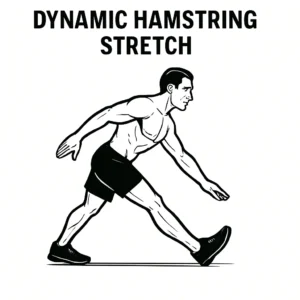
Unlike static stretches that are held for a period of time, dynamic stretches involve controlled movement. They are commonly used before physical activity because they prepare the muscles for exercise while increasing blood flow and mobility.
Dynamic hamstring stretches are particularly beneficial before running, sports, strength training, or any activity requiring explosive lower-body movement.
Stand upright with good posture. Begin walking forward while swinging one leg straight in front of you. At the same time, reach the opposite hand toward your raised foot without forcing contact.
Return your foot to the ground and repeat with the opposite leg, maintaining a smooth and controlled rhythm throughout the exercise.
Perform ten to fifteen repetitions on each leg.
Avoid rushing the movement or kicking your leg excessively high. The goal is controlled mobility rather than maximum flexibility.
Dynamic stretching activates the muscles while improving coordination, making it an excellent addition to any warm-up routine.
5. Upper Hamstring Stretch
The upper hamstring, located closer to where the muscle attaches beneath the pelvis, is an area that many traditional stretches fail to target effectively. Tightness in this region can contribute to discomfort while sitting, reduced hip mobility, and restricted movement during athletic activities.
To stretch this area, sit on the edge of a sturdy chair with one leg extended slightly in front of you and your heel resting on the floor.
Keep your back straight and lean your chest forward from your hips while maintaining a neutral spine. You should feel the stretch higher along the back of your thigh, closer to your glutes.
Hold this position for 20 to 30 seconds before repeating on the opposite side.
This variation is particularly useful for office workers, cyclists, runners, and anyone who spends extended periods seated throughout the day.
As with every hamstring stretch, avoid bouncing or forcing additional movement. Gentle, consistent stretching produces the best long-term results.
Benefits of Regular Hamstring Stretching
Stretching your hamstrings consistently provides benefits that extend far beyond improving flexibility. As your muscles become more mobile, your entire body begins to move more efficiently.
One of the biggest advantages is increased range of motion. Flexible hamstrings allow your hips and knees to move freely, making movements smoother and reducing stiffness during daily activities.
Stretching also helps relieve muscle tightness that develops after prolonged sitting or intense physical activity. Many people experience reduced soreness after incorporating gentle stretching into their recovery routine.
Better flexibility often leads to improved athletic performance as well. Runners can achieve a more efficient stride, weightlifters can perform deeper squats with better form, and recreational athletes frequently notice improved balance and coordination.
Another important benefit is injury prevention. Tight muscles are generally more susceptible to strains because they cannot lengthen effectively under sudden stress. While stretching alone cannot completely eliminate injuries, maintaining healthy flexibility helps prepare your muscles for physical activity.
Many people are surprised to discover that regular hamstring stretching may even reduce lower back discomfort. Tight hamstrings can pull on the pelvis, changing spinal alignment and increasing pressure on the lumbar region. Restoring flexibility often improves posture and decreases unnecessary tension in the lower back.
Finally, stretching encourages better body awareness. As you become more familiar with your flexibility and movement patterns, you’re better able to recognize muscle imbalances before they develop into larger issues.
Tips for Getting Better Results
Developing flexible hamstrings takes patience. While some people notice improvements within a few weeks, lasting changes occur through regular practice over months rather than days.
Listen carefully to your body during every stretching session. A mild pulling sensation is normal, but sharp or intense pain is not. If a stretch feels uncomfortable, reduce the range of motion until it becomes manageable.
Maintain slow, controlled breathing throughout each stretch. Many people unknowingly hold their breath, causing their muscles to tense instead of relax. Deep breathing encourages the nervous system to release muscle tension, allowing for a more effective stretch.
Focus on quality instead of depth. Stretching farther does not always mean stretching better. Proper posture, controlled movement, and consistency will produce greater long-term improvements than forcing your body into uncomfortable positions.
Finally, support your flexibility routine with regular physical activity. Walking, cycling, swimming, and strength training all help maintain healthy muscles and joints, making stretching even more effective.
Common Mistakes to Avoid
Many people unknowingly reduce the effectiveness of their stretching routine by using poor technique. Paying attention to proper form will help you achieve better results while lowering your risk of injury.
One of the most common mistakes is stretching without warming up first. Cold muscles are less flexible and more susceptible to strains. Even a short walk or a few minutes of light movement prepares your body for stretching.
Another frequent mistake is bouncing during a stretch. Although this technique was once common, modern research shows that bouncing can place unnecessary stress on muscle fibers and connective tissue. Smooth, controlled movements are far safer and more effective.
Poor posture is another issue. Rounding your back shifts the stretch away from your hamstrings and places additional strain on your spine. Always focus on hinging at your hips while keeping your chest lifted.
Finally, avoid comparing your flexibility to others. Everyone has different mobility levels based on age, activity level, and anatomy. Stretch only until you feel mild tension, never pain.
Final Thoughts
Flexible hamstrings contribute to far more than simply touching your toes. They play an essential role in how you walk, run, lift, bend, and perform countless everyday movements. When these muscles become tight, they can limit mobility, affect posture, and increase stress on surrounding joints and muscles.
Incorporating regular hamstring stretches into your weekly routine is one of the simplest ways to improve flexibility, enhance movement quality, and support long-term physical health. Whether you choose the standing hamstring stretch, seated variation, lying stretch, dynamic warm-up, or upper hamstring stretch, each exercise provides unique benefits that help restore healthy movement patterns.
Remember that flexibility is built gradually. Focus on proper technique, remain consistent, and avoid rushing the process. Over time, you’ll likely notice improved mobility, less stiffness, better posture, and greater confidence in your daily activities and workouts.
If your hamstrings remain consistently tight despite regular stretching or if you experience ongoing pain, consult a qualified healthcare professional or physical therapist. They can assess your movement patterns, identify any underlying issues, and recommend a treatment plan tailored to your needs.
By making hamstring stretching part of your regular routine, you’re investing in healthier movement, better performance, and improved overall well-being for years to come.
Last Updated on July 30, 2026
Written By

Join thousands of readers leveling up their fitness.
Skip the guesswork—get insights on training, health, and the right gear to support your progress.
You may also like
How To Do A Lat Pulldown Correctly
The lat pulldown is one of the best exercises for building a wider, stronger…
10 Different Types Of Deadlifts And Their Benefits
The deadlift is one of the most powerful compound exercises for building…

How to Strengthen Your Knees for Running
Strong, healthy knees are essential for runners, whether you’re logging miles…
Compound vs. Isolation Exercises: What’s the Difference?
When it comes to strength training, all exercises can generally be divided into…
Back Squat Exercise Guide: How to Master Back Squats
The back squat is one of the most effective strength training exercises for…
10 Medicine Ball Ab Exercises You Need To Try
If you’re tired of traditional crunches and planks, it’s time to add some…