

Building stronger arms is one of the most common fitness goals for beginners, and for good reason. Strong arms make everyday activities easier, improve athletic performance, and help you progress in nearly every upper-body exercise. Whether you’re lifting groceries, carrying luggage, pushing open a heavy door, or performing a bench press at the gym, your arm muscles are involved.
Many beginners believe they need complicated workout routines or expensive gym equipment to build stronger arms. The reality is much simpler. A handful of well-chosen exercises performed consistently with proper technique can deliver impressive results. The key is understanding which muscles you’re training, using correct form, and gradually increasing the challenge as your strength improves.
Another common mistake is focusing only on the biceps because they are the most visible arm muscles. While bigger biceps certainly contribute to arm size, they make up only a portion of your upper arm. The triceps actually account for a larger percentage of overall arm mass, while the shoulders play an important role in creating wider, stronger-looking arms. A balanced workout should train all of these muscle groups to improve both appearance and function.
This guide covers six of the best arm exercises for beginners, explains the muscles they target, and provides practical advice on training frequency, progression, and common mistakes. Whether you work out at home with dumbbells or train in a fully equipped gym, these exercises will help you build a strong foundation for long-term success.
Why Arm Training Is Important
Strong arms provide benefits that go far beyond appearance. They support countless movements both inside and outside the gym, making everyday tasks easier and reducing fatigue during physical activities.
Your biceps help bend the elbow and lift objects toward your body. The triceps extend the elbow, making them essential for pushing movements such as push-ups, bench presses, and overhead presses. Meanwhile, the shoulder muscles stabilize the entire upper arm and contribute to lifting, carrying, reaching, and throwing.
Developing strength across all these muscles creates better balance throughout the upper body. It also reduces the likelihood of muscular imbalances that can affect posture or increase injury risk.
Arm training also complements larger compound exercises. Stronger biceps improve pulling exercises like rows and pull-ups, while stronger triceps enhance pressing movements. As your arm strength improves, you’ll often notice progress in many other exercises as well.
Perhaps most importantly for beginners, arm workouts provide visible progress that helps maintain motivation. Seeing increased muscle definition and feeling everyday tasks become easier can encourage you to stay consistent with your fitness routine.
Understanding the Main Arm Muscles
Before choosing exercises, it helps to understand the primary muscles responsible for arm movement. Each plays a different role, and training them together leads to balanced development.
Biceps
The biceps are located at the front of the upper arm and are responsible for bending the elbow and rotating the forearm. They are heavily involved whenever you pull something toward your body or perform curling movements with dumbbells or barbells.
Although the biceps are often the focus of arm workouts, they should not be trained in isolation. Balanced development requires strengthening the surrounding muscles as well.
Triceps
The triceps sit on the back of the upper arm and are responsible for straightening the elbow. Since they make up nearly two-thirds of your upper arm, building stronger triceps has a significant impact on overall arm size.
Every pushing movement, from push-ups to overhead presses, relies heavily on the triceps. Direct triceps exercises further improve strength and muscle development.
Deltoids
The deltoids form the rounded shape of the shoulders and are divided into three sections: front, side, and rear. Strong shoulders improve upper-body stability, enhance posture, and contribute to wider-looking arms.
Although shoulder training is sometimes considered separate from arm workouts, including a few shoulder exercises creates a more complete upper-body routine.
Best Arm Workouts for Beginners
1. Bicep Curls
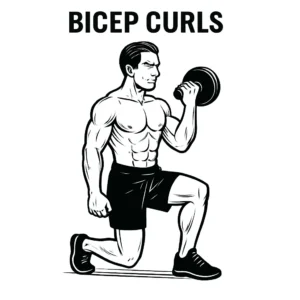
Few exercises are as recognizable as the bicep curl. It is often the first movement beginners learn because it directly targets one of the most visible muscles in the body.
Stand upright while holding a dumbbell in each hand with your palms facing forward. Allow your arms to hang naturally by your sides and keep your elbows close to your torso throughout the movement.
Slowly curl the weights toward your shoulders by bending your elbows. Avoid swinging your body or using momentum to lift the weights. Once the dumbbells reach shoulder height, pause briefly before lowering them slowly back to the starting position.
Controlling the lowering phase is just as important as lifting the weight. Moving too quickly reduces muscle engagement and limits your progress.
Bicep curls primarily strengthen the biceps while also engaging the forearms, making them an excellent starting point for any beginner arm workout.
2. Tricep Dips
The tricep dip is one of the most effective bodyweight exercises for strengthening the back of the upper arm.
Sit on the edge of a sturdy bench or chair and place your hands beside your hips. Slide your body slightly forward while supporting your weight with your arms. Extend your legs in front of you or bend your knees if you are new to the exercise.
Lower yourself by bending your elbows until they reach approximately a right angle. Keep your elbows pointing backward rather than flaring outward. Push through your palms to return to the starting position.
Because this exercise uses your body weight as resistance, it can be easily adjusted by bending or straightening your legs.
Tricep dips primarily target the triceps while also engaging the shoulders and chest.
3. Shoulder Press
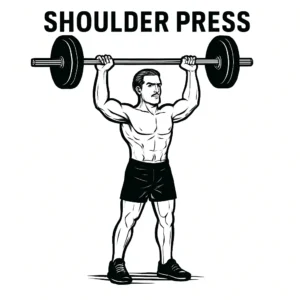
The shoulder press is one of the best exercises for developing stronger shoulders while also improving triceps strength.
Hold a pair of dumbbells at shoulder height with your palms facing forward. Stand with your feet shoulder-width apart and brace your core to maintain stability.
Press both dumbbells upward until your arms are almost fully extended overhead. Avoid locking your elbows aggressively at the top. Lower the weights slowly back to shoulder level while maintaining control throughout the movement.
The shoulder press strengthens all three heads of the deltoids while providing additional work for the triceps and upper chest.
Proper posture is essential. Avoid arching your lower back as the weights move overhead. Keeping your core engaged protects your spine and allows your shoulders to perform the majority of the work.
4. Hammer Curls
Although hammer curls look similar to standard bicep curls, the way you hold the dumbbells changes how your muscles work. Instead of facing your palms upward, you keep them facing each other throughout the movement. This neutral grip places greater emphasis on the brachialis and brachioradialis, two muscles that contribute to thicker, stronger-looking arms and improved grip strength.
Stand with a dumbbell in each hand and let your arms hang naturally at your sides. Keep your shoulders relaxed and your elbows tucked close to your body. Curl both dumbbells toward your shoulders while maintaining the neutral grip. Pause briefly at the top before lowering the weights slowly back to the starting position.
One of the biggest advantages of hammer curls is that they strengthen muscles often overlooked during traditional bicep training. Over time, developing these muscles can improve your performance in pulling exercises such as rows, pull-ups, and deadlifts because of the added grip strength.
As with regular curls, avoid swinging the weights. If you find yourself leaning backward to lift the dumbbells, reduce the weight and focus on slow, controlled repetitions.
5. Overhead Triceps Extension
The overhead triceps extension is one of the best isolation exercises for developing the triceps because it trains the muscle through a full range of motion. It is especially effective for targeting the long head of the triceps, which contributes significantly to overall arm size.
Begin by holding a single dumbbell with both hands. Raise it overhead so your arms are extended above your head. Keep your elbows close together and pointed forward rather than allowing them to flare outward.
Slowly bend your elbows and lower the dumbbell behind your head until you feel a comfortable stretch in your triceps. Pause briefly before extending your arms back to the starting position using only your triceps to drive the movement.
Maintaining good posture is essential throughout the exercise. Stand tall with your core engaged and avoid arching your lower back. If you struggle to keep your elbows steady, use a lighter weight until your technique improves.
This exercise pairs well with pressing movements because it directly targets the triceps after they have already been activated during compound lifts.
6. Lateral Raises
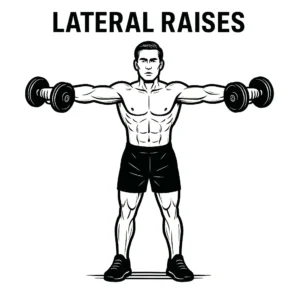
While lateral raises primarily target the shoulders, they play an important role in creating stronger, more balanced arms. Well-developed side deltoids contribute to broader shoulders, making the entire upper body appear more athletic.
Hold a dumbbell in each hand with your arms resting at your sides and your palms facing inward. Stand with a slight bend in your elbows and keep your chest lifted.
Raise both arms outward until they reach approximately shoulder height. Imagine pouring water from a pitcher as you lift, allowing your thumbs to remain slightly lower than your little fingers. Pause briefly before lowering the weights slowly under control.
Lateral raises require far less weight than most beginners expect. Using heavy dumbbells often leads to swinging and momentum, reducing shoulder activation while increasing stress on the joints. Choosing lighter weights with strict form produces much better results.
Because the shoulder muscles are relatively small, even moderate resistance can create an effective workout when the exercise is performed correctly.
How Often Should Beginners Train Arms?
For most beginners, training the arms two or three times per week provides an excellent balance between progress and recovery.
If you follow a full-body workout routine, include one or two arm exercises at the end of each session. This allows your arms to receive regular stimulation while still prioritizing larger compound movements.
If you follow an upper-body and lower-body split, dedicate part of your upper-body workouts to direct arm training. This approach provides enough volume for muscle growth without creating excessive fatigue.
A dedicated arm day can also be effective for intermediate lifters, but beginners usually benefit more from spreading arm exercises across multiple workouts each week.
Allow at least 48 hours before training the same muscles again. This recovery period gives your muscles time to repair and adapt, leading to better long-term strength gains.
How Many Arm Exercises Should You Perform?
More exercises do not always produce better results. Beginners often assume they need lengthy workouts to build muscle, but a focused routine is usually far more effective.
A typical beginner workout should include three or four arm exercises that collectively target the biceps, triceps, and shoulders. Performing three sets of eight to twelve repetitions for each exercise is sufficient for building strength and muscle while learning proper technique.
As your experience grows, you can gradually increase training volume by adding additional sets, slightly heavier weights, or new exercise variations. The goal is to challenge your muscles progressively without sacrificing movement quality.
Remember that consistency matters far more than workout length. A well-designed 40-minute session performed regularly will produce better results than an inconsistent two-hour workout.
Nutrition and Recovery for Stronger Arms
Exercise is only one part of building stronger muscles. Your nutrition and recovery habits play an equally important role in determining your results.
Protein is essential because it provides the building blocks your muscles need to repair and grow after training. Aim to include a quality protein source with each meal, such as lean meat, fish, eggs, dairy products, beans, or tofu.
Carbohydrates also deserve attention because they provide the energy needed for productive workouts. Choosing whole grains, fruits, vegetables, and other minimally processed foods helps support consistent energy levels throughout the day.
Hydration is another factor that beginners sometimes overlook. Drinking enough water before, during, and after exercise helps maintain performance and supports recovery.
Sleep may be the most underrated part of any fitness program. During sleep, your body repairs damaged muscle tissue and prepares for future training sessions. Most adults benefit from seven to nine hours of quality sleep each night.
Avoid the temptation to train your arms every day. Giving your muscles enough time to recover allows them to become stronger, making your next workout more productive.
Common Arm Training Mistakes
Many beginners train consistently but become frustrated when they don’t see noticeable improvements. In most cases, the issue isn’t a lack of effort. It’s a matter of technique, programming, or recovery.
One of the most common mistakes is trying to lift weights that are too heavy. While progressive overload is essential for building muscle, sacrificing form to move heavier weights reduces muscle activation and increases the risk of injury. Choose a weight that allows you to complete every repetition with proper technique.
Another mistake is training only the biceps. Since the triceps make up a larger portion of the upper arm, neglecting them limits overall arm development. Including exercises for the shoulders is equally important because they improve upper-body strength and create a more balanced appearance.
Many beginners also rush through their repetitions. Slowing down the movement, especially during the lowering phase, increases the amount of time the muscles remain under tension, leading to better muscle development.
Recovery is another area that is often overlooked. Muscles become stronger while resting, not while exercising. Training the same muscle groups every day can slow progress and increase fatigue. Allowing adequate recovery between sessions helps your muscles repair and grow.
Finally, many people expect immediate results. Building strength and muscle takes consistency. Small improvements made over weeks and months produce far greater long-term results than constantly changing workouts in search of quick fixes
Final Thoughts
Building stronger arms does not require complicated routines or countless exercises. By focusing on a small number of effective movements and performing them consistently, beginners can develop impressive strength, improve muscle definition, and enhance overall upper-body performance.
The six exercises covered in this guide provide a solid foundation for balanced arm development. Together, they strengthen the biceps, triceps, and shoulders while improving stability, coordination, and functional strength. Combined with proper technique, gradual progression, and adequate recovery, these exercises can deliver lasting results.
Remember that success comes from consistency rather than perfection. Prioritize quality repetitions over heavier weights, allow your muscles time to recover, and stay committed to your training schedule. Small improvements made week after week eventually lead to significant increases in strength and confidence.
Finally, be patient with the process. Building muscle takes time, but every workout contributes to your progress. As your strength improves, you’ll not only notice changes in the way your arms look but also in how they perform during everyday activities and more advanced exercises. By establishing good habits now, you’ll build a strong foundation that supports your fitness journey for years to come.
Last Updated on July 30, 2026
Written By

Join thousands of readers leveling up their fitness.
Skip the guesswork—get insights on training, health, and the right gear to support your progress.
You may also like
How To Do A Lat Pulldown Correctly
The lat pulldown is one of the best exercises for building a wider, stronger…
10 Different Types Of Deadlifts And Their Benefits
The deadlift is one of the most powerful compound exercises for building…
How to Strengthen Your Knees for Running
Strong, healthy knees are essential for runners, whether you’re logging miles…
Compound vs. Isolation Exercises: What’s the Difference?
When it comes to strength training, all exercises can generally be divided into…
Back Squat Exercise Guide: How to Master Back Squats
The back squat is one of the most effective strength training exercises for…
10 Medicine Ball Ab Exercises You Need To Try
If you’re tired of traditional crunches and planks, it’s time to add some…