

Strong glute muscles do much more than enhance your appearance. They are among the most powerful muscles in the human body and play a vital role in almost every movement you perform, from walking and climbing stairs to running, lifting weights, and maintaining proper posture. Whether you’re an athlete looking to improve performance, someone trying to reduce lower back pain, or simply aiming to build a stronger lower body, understanding how the glutes work is the first step toward achieving your goals.
Unfortunately, the glutes are often overlooked during training. Many people spend hours strengthening their arms or chest while neglecting the muscles responsible for hip stability, balance, and lower-body power. Modern lifestyles also contribute to weaker glutes. Sitting for long periods each day can reduce muscle activation, making it more difficult for the glutes to perform efficiently during exercise and everyday activities.
The good news is that the glute muscles respond exceptionally well to targeted strength training. With the right combination of compound exercises, isolation movements, proper recovery, and progressive overload, you can develop stronger, more functional glutes regardless of your current fitness level.
In this guide, you’ll learn what the glute muscles are, where they are located, what they do, and why they are essential for overall health and athletic performance. You’ll also discover the best glute exercises, effective stretching techniques, and practical strategies to help you build stronger glutes safely and efficiently.
Best Glute Exercises for Building Strength and Muscle
Developing stronger glutes requires more than performing random lower-body exercises. The most effective training programs combine compound movements, which recruit multiple muscle groups, with isolation exercises that place greater emphasis on the glutes. This combination helps build strength, improve muscle development, and enhance movement quality.
The exercises below are among the most effective for activating all three glute muscles. Focus on controlled movements, proper technique, and gradual progression rather than simply lifting heavier weights.
Squats
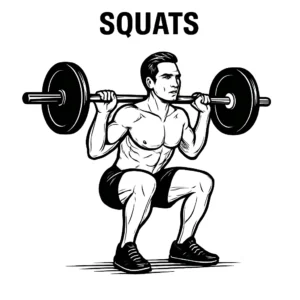
The squat is one of the most effective lower-body exercises because it strengthens the glutes, quadriceps, hamstrings, and core simultaneously. While many people think of squats as a quad exercise, proper squat depth and technique significantly increase glute activation.
Stand with your feet approximately shoulder-width apart and point your toes slightly outward. Brace your core, keep your chest lifted, and lower your hips until your thighs are at least parallel to the floor or as low as your mobility comfortably allows. Push through your heels as you return to a standing position while squeezing your glutes at the top.
The deeper you squat while maintaining proper form, the more your glutes contribute to the movement. Start with your body weight before progressing to dumbbells or a barbell as your strength improves.
Glute Bridges
The glute bridge is a beginner-friendly exercise that strengthens the glutes while improving hip mobility and core stability. Although similar to the hip thrust, it is performed from the floor, making it an excellent starting point for those new to strength training.
Lie on your back with your knees bent and your feet flat on the floor. Tighten your abdominal muscles before driving through your heels to lift your hips. At the top of the movement, squeeze your glutes for one or two seconds before lowering yourself slowly back to the starting position.
Once bodyweight glute bridges become easy, resistance bands, dumbbells, or barbells can be added to continue building strength.
Step-Ups
Step-ups are often overlooked, yet they are one of the best functional exercises for developing stronger glutes while improving balance and coordination.
Stand in front of a sturdy bench or exercise box that allows your knee to bend to approximately ninety degrees. Place one foot firmly on the platform and press through your heel to lift your body upward. Avoid pushing off excessively with your trailing leg. Instead, allow the working leg to perform most of the effort.
Lower yourself back down slowly before repeating all repetitions on one side and then switching legs.
Step-ups closely mimic everyday activities such as climbing stairs, making them an excellent exercise for improving functional lower-body strength
Hip Thrusts
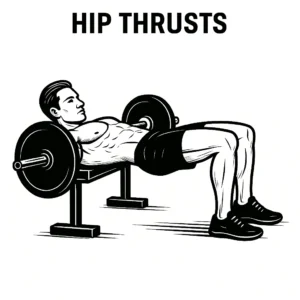
If your goal is maximizing glute growth, the hip thrust deserves a place in your workout routine. Many strength coaches consider it one of the best exercises for directly targeting the gluteus maximus because it places the muscle under significant tension throughout the movement.
Sit on the floor with your upper back resting against a sturdy bench. Position your feet flat on the floor with your knees bent. Place a barbell or other resistance across your hips if you are ready for additional weight.
Drive through your heels and raise your hips until your body forms a straight line from your shoulders to your knees. Pause briefly while squeezing your glutes as hard as possible before lowering yourself under control.
Avoid arching your lower back to achieve extra height. Instead, concentrate on producing the movement by contracting your glutes.
Romanian Deadlifts
Although Romanian deadlifts are commonly associated with hamstring training, they are also one of the most effective exercises for developing the glutes.
Hold a barbell or pair of dumbbells in front of your thighs while standing tall. Keeping your knees slightly bent, push your hips backward as you lower the weights along the front of your legs. Continue lowering until you feel a comfortable stretch in your hamstrings while maintaining a neutral spine.
Drive your hips forward to return to the starting position, squeezing your glutes at the top.
This hip-hinge movement teaches proper posterior chain mechanics while improving strength throughout the glutes and hamstrings.
Walking Lunges
Walking lunges develop unilateral strength, helping correct muscle imbalances while improving stability and coordination.
Step forward with one leg and lower your body until both knees are bent to approximately ninety degrees. Push through your front heel to bring your back leg forward into the next repetition.
Maintaining an upright posture and taking slightly longer steps increases glute activation, making walking lunges an excellent addition to any lower-body workout.
What Are the Glute Muscles?
The glute muscles, commonly referred to as the glutes, are a group of three muscles located in the buttocks. Together, they stabilize the hips, support the pelvis, and generate the power needed for lower-body movement. Every time you stand up from a chair, climb a flight of stairs, sprint, or jump, your glutes are working behind the scenes to keep you balanced and moving efficiently.
Although many people think of the glutes primarily as muscles that influence physical appearance, their function extends far beyond aesthetics. Healthy, well-developed glutes contribute to better posture, improved athletic performance, and a reduced risk of injury by helping the body move correctly during daily activities and exercise.
Each of the three glute muscles has a unique role, but they work together to provide strength, stability, and control.
Gluteus Maximus
The gluteus maximus is the largest and strongest muscle in the body. It forms most of the visible shape of the buttocks and is responsible for powerful hip extension. This muscle is heavily involved in movements such as squatting, deadlifting, climbing stairs, sprinting, and jumping.
Because of its size and strength, the gluteus maximus generates significant force during explosive activities. Developing this muscle not only improves lower-body strength but also enhances athletic performance and functional movement.
Gluteus Medius
Situated along the outer portion of the hip, the gluteus medius plays a key role in stabilizing the pelvis during walking, running, and standing on one leg. It prevents excessive side-to-side movement and helps maintain proper alignment of the hips and knees.
Weakness in this muscle can contribute to poor balance, knee discomfort, and inefficient movement patterns, particularly during single-leg activities.
Gluteus Minimus
The gluteus minimus lies beneath the gluteus medius and is the smallest of the three muscles. Although it receives less attention than the other glutes, it is essential for hip stabilization and internal rotation. It works closely with the gluteus medius to support smooth, controlled movement during everyday activities and athletic performance.
Together, these three muscles create a strong foundation for lower-body strength, balance, and mobility.
Where Are Your Glutes?
Your glutes are located at the back of your hips and pelvis, forming the muscles of the buttocks. While they may appear to function as a single muscle, they are actually made up of the gluteus maximus, gluteus medius, and gluteus minimus, each positioned at different depths.
The gluteus maximus sits closest to the surface and is responsible for the shape and size of the buttocks. Beneath it are the gluteus medius and gluteus minimus, which contribute to hip stability and movement.
Understanding where these muscles are located can help you perform exercises more effectively. Instead of simply moving through repetitions, you’ll be able to focus on contracting the correct muscles during each movement, leading to better activation and improved results.
Why Strong Glutes Matter
Strong glutes are essential for far more than athletic performance. They play a central role in maintaining proper posture, supporting healthy movement patterns, and protecting the body from unnecessary strain.
One of their most important functions is stabilizing the pelvis. Every step you take requires your glutes to maintain balance and keep your hips aligned. When these muscles are weak, other parts of the body often compensate, increasing stress on the knees, hips, and lower back.
This is one reason many physical therapists include glute-strengthening exercises in rehabilitation programs for individuals experiencing chronic lower back pain or knee discomfort. Improving glute strength helps restore proper movement mechanics and reduces excessive pressure on surrounding joints.
For athletes, strong glutes contribute to faster sprinting, higher jumps, greater lifting power, and improved agility. Sports such as soccer, basketball, tennis, football, volleyball, and track all rely heavily on powerful hip extension generated by the gluteus maximus.
Even if you don’t participate in sports, strengthening your glutes makes everyday tasks easier. Activities such as carrying groceries, climbing stairs, lifting heavy objects, and standing for extended periods become more comfortable when your glutes are functioning properly.
Another benefit is improved posture. Strong glutes help maintain a neutral pelvis and support the natural curve of the spine, reducing the tendency to develop poor postural habits associated with prolonged sitting.
How to Stretch Your Glutes
Strength training builds stronger muscles, but flexibility and mobility are equally important for maintaining healthy movement patterns. Tight glutes can contribute to hip discomfort, reduced range of motion, and lower back tension, especially for people who spend much of the day sitting.
Stretching after exercise or on recovery days can improve mobility while helping your muscles relax.
The seated glute stretch is one of the simplest options. Sit upright with one leg crossed over the other and gently pull your knee toward your chest until you feel a comfortable stretch through the outside of your hip. Hold the position without bouncing before repeating on the opposite side.
Another effective stretch is the figure-four stretch. Lie on your back, place one ankle across the opposite knee, and gently pull your supporting leg toward your chest. This stretch targets both the glutes and the deep muscles surrounding the hip.
The pigeon pose, commonly practiced in yoga, provides a deeper stretch for the glutes and hip rotators. While it requires greater flexibility, it can be highly effective when performed carefully and without forcing the position.
Stretching should never be painful. Move slowly into each position and breathe normally while allowing the muscles to relax.
How to Grow Your Glutes Effectively
Building stronger and more defined glutes takes more than simply performing a few lower-body exercises each week. Muscle growth is the result of consistent training, proper recovery, and good nutrition. While there is no shortcut, following a structured approach will help you see steady progress over time.
One of the most important principles is progressive overload. Your glute muscles need to be challenged regularly in order to adapt. This can be achieved by gradually increasing the weight you lift, performing additional repetitions, adding more sets, or improving the quality of each repetition. Small improvements over time produce better long-term results than making large jumps in weight that compromise your technique.
Exercise selection is equally important. A balanced glute workout should include both compound and isolation exercises. Compound movements such as squats, Romanian deadlifts, and lunges allow you to lift heavier loads while engaging multiple muscle groups. Isolation exercises like hip thrusts, glute bridges, cable kickbacks, and resistance band exercises place greater emphasis on the glutes, helping maximize muscle activation.
Recovery is often overlooked, but it is essential for muscle growth. Your muscles become stronger during recovery, not while you are training. Aim to allow at least one or two days of rest before training your glutes again. Quality sleep also plays a significant role in muscle repair and overall performance.
Nutrition is another key factor. Your body needs enough protein to repair and build muscle tissue after exercise. Including lean meats, fish, eggs, dairy products, legumes, or other protein-rich foods as part of a balanced diet will support recovery and muscle development. Staying hydrated and consuming enough calories to fuel your workouts are equally important if your goal is to increase muscle size.
Finally, remain patient and consistent. Visible changes in muscle development take time. Rather than constantly changing your workout routine, focus on mastering proper technique, progressively increasing resistance, and maintaining a regular training schedule.
Common Mistakes That Can Limit Glute Growth
Many people train consistently but still struggle to build stronger glutes because of avoidable mistakes.
One of the most common issues is relying on momentum instead of muscle control. Performing exercises too quickly often shifts the workload away from the glutes and onto other muscles. Slowing down each repetition improves muscle activation and helps reinforce proper technique.
Another mistake is using excessive weight before mastering the movement. While lifting heavier weights is an important part of progressive overload, adding resistance too quickly often leads to poor form. It is far more effective to perform controlled repetitions with good technique than to sacrifice form for additional weight.
Skipping warm-ups is another habit that can affect both performance and safety. A few minutes of dynamic mobility exercises and light activation drills prepare your hips and glutes for training, allowing you to move more efficiently during your workout.
Some people also neglect recovery by training the same muscles every day. Since muscles need time to repair after resistance training, working your glutes too frequently can slow progress rather than accelerate it.
Finally, many lifters fail to establish a strong mind-muscle connection. Simply moving through the exercise is not enough. Concentrate on actively contracting your glutes during every repetition to maximize muscle engagement.
Final Thoughts
The glute muscles are among the most important muscles in the body, influencing everything from posture and balance to athletic performance and everyday movement. Developing stronger glutes is not simply about appearance. It is about improving the way your body functions, reducing your risk of injury, and building a solid foundation for long-term health and fitness.
A successful glute training program combines effective exercises, proper technique, progressive overload, adequate recovery, and balanced nutrition. Squats, hip thrusts, glute bridges, step-ups, Romanian deadlifts, and lunges each contribute unique benefits, allowing you to develop strength through a variety of movement patterns.
Remember that consistency will always produce better results than chasing quick fixes. By focusing on high-quality repetitions, gradually increasing the challenge of your workouts, and giving your muscles the time they need to recover, you can build stronger, more functional glutes that support you both inside and outside the gym.
Whether your goal is to improve athletic performance, reduce lower-body discomfort, or simply develop greater strength and confidence, investing time in glute training is one of the best decisions you can make for your overall fitness. Stay committed to the process, prioritize proper form, and celebrate steady progress along the way. Over time, those small improvements will add up to meaningful and lasting results.
Last Updated on July 29, 2026
Written By

Join thousands of readers leveling up their fitness.
Skip the guesswork—get insights on training, health, and the right gear to support your progress.
You may also like
How To Do A Lat Pulldown Correctly
The lat pulldown is one of the best exercises for building a wider, stronger…
10 Different Types Of Deadlifts And Their Benefits
The deadlift is one of the most powerful compound exercises for building…
How to Strengthen Your Knees for Running
Strong, healthy knees are essential for runners, whether you’re logging miles…
Compound vs. Isolation Exercises: What’s the Difference?
When it comes to strength training, all exercises can generally be divided into…
Back Squat Exercise Guide: How to Master Back Squats
The back squat is one of the most effective strength training exercises for…
10 Medicine Ball Ab Exercises You Need To Try
If you’re tired of traditional crunches and planks, it’s time to add some…