

The hack squat is one of the most effective lower-body exercises for building stronger, more muscular legs while improving stability and movement control. Whether your goal is to increase strength, develop your quadriceps, or add variety to your leg training routine, the hack squat offers an excellent combination of safety and effectiveness when performed correctly.
Unlike traditional barbell squats, the hack squat machine guides your movement through a fixed path. This allows you to focus on proper technique while reducing the demands placed on your lower back and balance. Because of this controlled movement, beginners often find the exercise easier to learn, while experienced lifters appreciate the opportunity to push their leg muscles harder without compromising form.
However, simply stepping onto a hack squat machine does not guarantee results. Proper foot placement, body positioning, and range of motion all play an important role in maximizing muscle activation while minimizing unnecessary stress on your knees and lower back.
This guide explains everything you need to know about the hack squat, including the muscles it targets, the correct technique, common mistakes to avoid, and how it compares with other popular lower-body exercises. By the end, you’ll know exactly how to perform a hack squat safely and confidently, regardless of your experience level.
What Is a Hack Squat?
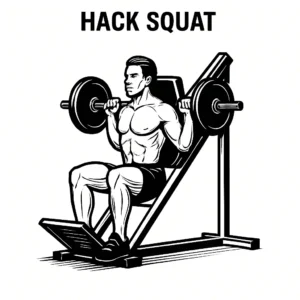
A hack squat is a compound lower-body exercise that primarily targets the quadriceps while also engaging the glutes, hamstrings, calves, and core. It is commonly performed using a hack squat machine, although a barbell variation also exists.
The machine positions your shoulders underneath padded supports while your back remains against a fixed pad. As you squat, the machine follows a predetermined path, allowing you to focus entirely on driving through your legs instead of balancing a loaded barbell.
This guided movement is one of the biggest reasons why the hack squat has become a staple exercise in commercial gyms. It provides a safer environment for training with heavier weights while helping lifters maintain consistent form throughout every repetition.
Many strength coaches recommend incorporating hack squats into a leg program because they allow greater emphasis on the quadriceps than many traditional squat variations. They are particularly useful for individuals looking to increase thigh size, improve lower-body strength, or supplement conventional squats without excessively loading the spine.
Although the machine offers greater stability, it should never be mistaken for an easy exercise. Performing hack squats with proper depth and controlled movement can challenge even advanced athletes.
What Does the Hack Squat Work?
One of the biggest advantages of the hack squat is its ability to recruit multiple lower-body muscle groups simultaneously. While the quadriceps perform most of the work, several supporting muscles contribute throughout the movement.
Quadriceps
The quadriceps are the primary muscles targeted during the hack squat. Located on the front of your thighs, they are responsible for extending your knees as you push yourself back to the starting position.
Because of the machine’s fixed movement pattern, the quadriceps often receive more direct stimulation than they would during a traditional back squat. This makes the exercise especially effective for increasing thigh size and developing leg definition.
Glutes
Your glute muscles become increasingly active as you descend deeper into the squat. During the upward phase, they help extend the hips and generate force as you return to a standing position.
If your goal is to emphasize glute development, adjusting your foot placement slightly higher on the platform can increase glute involvement while still maintaining strong quadriceps activation.
Hamstrings
Although the hamstrings are not the primary movers, they play an important stabilizing role throughout the exercise. They help support knee movement and assist the glutes during hip extension.
Strong hamstrings also contribute to better balance between the muscles at the front and back of the legs, reducing the likelihood of muscular imbalances over time.
Calves
Your calf muscles help stabilize your ankles throughout every repetition. They ensure proper balance as your weight shifts during both the lowering and lifting phases.
While the calves are not heavily trained during hack squats, they remain active enough to contribute to overall lower-body stability.
Core
Even though the machine supports your back, your abdominal muscles remain engaged throughout the exercise. A strong core helps maintain a neutral spine and prevents excessive movement that could compromise your technique.
Keeping your core braced also improves force transfer from your legs, allowing you to lift more efficiently while protecting your lower back.
Hack Squat vs. Leg Press
The hack squat and the leg press are two of the most popular machine-based leg exercises. Although both target the quadriceps, glutes, and hamstrings, they provide different training experiences and serve different purposes.
The hack squat requires you to remain in an upright position while your shoulders support the load. This closely resembles the mechanics of a traditional squat, encouraging greater involvement from stabilizing muscles and requiring more control throughout the movement. Many lifters choose the hack squat when they want to improve squat strength or develop their quadriceps.
The leg press, on the other hand, places you in a seated position with your back fully supported. Because balance is less of a factor, many people can move heavier loads on the leg press than on the hack squat. This makes it an effective exercise for building lower-body strength and muscle while placing minimal stress on the spine.
Neither exercise is objectively better. If your primary goal is to improve squat performance and develop functional strength, the hack squat is usually the stronger choice. If you are looking to maximize training volume with reduced fatigue on your core and back, the leg press can be an excellent addition to your routine.
Many experienced lifters include both exercises in their training program. Performing hack squats first develops strength and movement quality, while finishing with the leg press allows additional muscle stimulation without requiring as much balance and coordination.
Barbell Hack Squat
While most people associate the exercise with the hack squat machine, the barbell hack squat is an effective variation that requires minimal equipment. Instead of positioning the bar across your shoulders, the barbell is held behind your legs throughout the movement.
This variation challenges your grip strength, coordination, and balance while still placing significant emphasis on the quadriceps and glutes.
To perform a barbell hack squat, stand with your feet approximately shoulder-width apart and position a loaded barbell behind your legs. Bend down and grip the bar using an overhand grip while keeping your chest lifted and your core braced.
Press through your heels as you extend your hips and knees together, lifting the bar until you reach a standing position. Lower the weight slowly by reversing the movement while maintaining control throughout the descent.
Because the bar travels close to your legs, wearing long socks or pants can make the exercise more comfortable. Start with lighter weights until you become familiar with the movement pattern, as balancing the bar behind your body may feel unusual at first.
Although the machine variation remains the better option for most gym-goers, the barbell hack squat provides an excellent alternative when a hack squat machine is unavailable.
Best Hack Squat Alternatives
Not every gym has a hack squat machine, and some people simply enjoy adding variety to their leg workouts. Fortunately, several exercises provide similar benefits while targeting the same muscle groups.
The front squat is one of the closest free-weight alternatives. Holding the barbell across the front of your shoulders encourages a more upright torso, increasing quadriceps involvement in a way that closely resembles the hack squat.
The goblet squat is another excellent option, particularly for beginners. Holding a dumbbell or kettlebell in front of your chest promotes proper squat mechanics while improving mobility and balance.
Bulgarian split squats are highly effective for developing unilateral strength. Because each leg works independently, this exercise also helps correct muscular imbalances while improving coordination and stability.
The Smith machine squat provides another machine-based option that offers a guided movement similar to the hack squat. Although the mechanics differ slightly, it allows you to train your legs with greater stability than a traditional barbell squat.
Walking lunges and step-ups are also valuable additions to a lower-body routine. These exercises improve balance, coordination, and functional strength while effectively targeting the quadriceps, glutes, and hamstrings.
Choosing the right alternative depends on your available equipment, training goals, and experience level. Regardless of the exercise you select, proper technique should always take priority over lifting heavier weights.
Common Hack Squat Mistakes and How to Avoid Them
Even though the hack squat machine provides a guided movement, mistakes in technique can still reduce its effectiveness and increase the risk of discomfort or injury. Paying attention to your form will help you get the most from every workout while protecting your joints.
One of the most common mistakes is placing your feet too low on the platform. This position forces your knees to travel excessively forward, increasing pressure on the knee joint and making the exercise feel uncomfortable. Instead, position your feet around shoulder-width apart with enough room for your knees to move naturally throughout the squat.
Another frequent mistake is allowing your heels to lift off the platform. When this happens, your body shifts forward, reducing stability and limiting force production. Keep your heels firmly planted from start to finish. If you struggle to do this, reduce the weight or work on improving your ankle mobility.
Many people also rush through the movement. Dropping too quickly into the squat removes tension from the muscles and makes it more difficult to maintain control. Lower yourself steadily over two to three seconds, pause briefly at the bottom, and then drive upward with purpose.
Locking your knees at the top of each repetition is another habit worth correcting. Fully extending the knees transfers much of the load from the muscles to the joints. Finish each repetition with your legs nearly straight while maintaining a slight bend in the knees to keep constant tension on your quadriceps.
Using too much weight is perhaps the biggest mistake of all. While it may be tempting to load the machine with heavy plates, sacrificing range of motion and technique limits muscle activation and increases the likelihood of injury. Choose a weight that allows you to complete every repetition with consistent form before progressing to heavier loads.
Finally, avoid allowing your lower back to round away from the back pad. Keep your back firmly against the pad throughout the movement and brace your core before every repetition. This creates a stable base and helps protect your spine.
Tips for Better Hack Squats
Small adjustments in technique can make a significant difference in both performance and comfort. Developing good habits early will help you progress more efficiently and reduce the likelihood of injury.
Before each set, take a deep breath and brace your core as though you are preparing for someone to gently push against your stomach. This creates a stable torso and helps maintain proper spinal alignment throughout the exercise.
Always control the lowering phase instead of allowing gravity to do the work. Many experienced lifters spend approximately two to three seconds descending before driving upward with power. This controlled tempo increases muscle engagement and improves overall technique.
Avoid looking down at your feet during the movement. Instead, keep your head in a neutral position and look straight ahead. This helps maintain better posture and encourages a more natural spinal position.
Pay close attention to how your knees move. They should travel in the same direction as your toes throughout the entire exercise. If your knees collapse inward, reduce the weight and focus on improving your movement pattern before increasing the load again.
Foot placement is another area worth experimenting with. Everyone’s body proportions and mobility differ slightly, so do not be afraid to make small adjustments until you find a position that feels natural while allowing a full range of motion.
Finally, remember that consistency produces better results than constantly changing exercises. Including hack squats as a regular part of your leg routine and gradually increasing the weight over time will lead to greater improvements in strength and muscle development than frequently switching between different movements.
Final Thoughts
The hack squat has earned its place as one of the most effective machine-based exercises for developing stronger, more muscular legs. By combining stability with the ability to progressively increase resistance, it offers an excellent training option for beginners, experienced lifters, and athletes alike.
Although the machine provides a guided movement, proper technique remains essential. Paying attention to foot placement, maintaining a controlled range of motion, and selecting an appropriate weight will help you maximize muscle activation while reducing unnecessary stress on your joints.
Whether your goal is to build bigger quadriceps, improve lower-body strength, or supplement traditional squats, the hack squat deserves a place in a well-balanced training program. Combined with consistent effort, good recovery habits, and progressive overload, this exercise can play a significant role in helping you achieve stronger, healthier, and more capable legs.
Rather than chasing heavier weights too quickly, focus on mastering the fundamentals. Consistently performing high-quality repetitions will deliver better long-term results than sacrificing form for additional load. Over time, the combination of proper technique and gradual progression will help you build strength, improve confidence, and get the most out of every leg workout.
Last Updated on July 29, 2026
Written By

Join thousands of readers leveling up their fitness.
Skip the guesswork—get insights on training, health, and the right gear to support your progress.
You may also like
How To Do A Lat Pulldown Correctly
The lat pulldown is one of the best exercises for building a wider, stronger…
10 Different Types Of Deadlifts And Their Benefits
The deadlift is one of the most powerful compound exercises for building…
How to Strengthen Your Knees for Running
Strong, healthy knees are essential for runners, whether you’re logging miles…
Compound vs. Isolation Exercises: What’s the Difference?
When it comes to strength training, all exercises can generally be divided into…
Back Squat Exercise Guide: How to Master Back Squats
The back squat is one of the most effective strength training exercises for…
10 Medicine Ball Ab Exercises You Need To Try
If you’re tired of traditional crunches and planks, it’s time to add some…