

Want a stronger, thicker, and more defined back? Start rowing.
Row exercises are among the most effective movements for building back strength and improving posture. Whether you’re training for aesthetics, strength, or performance, mastering row variations is essential.
In this article, we’ll explore the best row exercises, highlight the muscles they target, and give you form tips to make every rep count.
What Are Row Exercises?
In strength training, rows refer to pulling movements where you draw weight toward your torso. These exercises mimic the motion of rowing a boat and primarily target the upper and mid-back.
Rows Exercise: Muscles Worked
- Latissimus dorsi (lats)
- Rhomboids
- Trapezius
- Posterior deltoids
- Biceps (secondary)
- Erector spinae (for stabilization)
7 Best Row Exercises to Build a Stronger Back
These exercises range from beginner-friendly to advanced and target your back from different angles.
1. Bent-Over Barbell Row
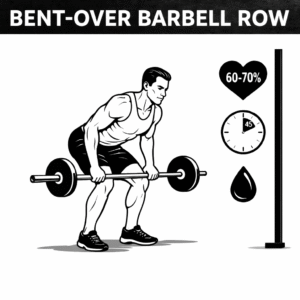
Why It’s Great: A classic for mass-building. Trains the entire back, especially the lats and mid-traps.
How to Do It:
- Hinge at your hips with a flat back.
- Hold a barbell with an overhand grip.
- Pull the bar toward your lower ribcage.
- Lower with control.
Tip: Avoid rounding your back. Keep core braced.
2. Single-Arm Dumbbell Row
Why It’s Great: Isolates one side of the back to fix muscle imbalances.
How to Do It:
- Place one knee and hand on a bench.
- Row the dumbbell with your other hand.
- Pull toward your hip and squeeze your back.
Tip: Avoid twisting your torso—focus on controlled movement.
3. Inverted Row (Bodyweight Row)
Why It’s Great: Great for beginners and building foundational strength.
How to Do It:
- Lie under a bar (like in a squat rack).
- Grip the bar, keep your body straight.
- Pull your chest to the bar, then lower down.
Tip: Bend your knees to make it easier or extend your legs to make it harder.
4. T-Bar Row
Why It’s Great: Allows for heavy loads and deep back engagement.
How to Do It:
- Use a T-bar machine or landmine setup.
- Grip the handles, hinge forward, and row toward your chest.
Tip: Use a wide grip to emphasize the upper back or a narrow grip for the lats.
5. Seated Cable Row
Why It’s Great: Provides constant tension for great mind-muscle connection.
How to Do It:
- Sit at a cable machine, feet braced.
- Use a V-handle or a wide grip.
- Pull the handle toward your torso while squeezing your shoulder blades.
Tip: Keep your torso stable—avoid leaning too far forward or back.
6. Chest-Supported Row
Why It’s Great: Eliminates momentum, isolating your back muscles.
How to Do It:
- Lie face down on an incline bench.
- Row dumbbells or a barbell from the floor.
- Focus on controlled contractions.
Tip: Avoid letting your shoulders shrug during the pull.
7. Upright Row
Why It’s Great: Works the shoulders (not back!)—especially the lateral delts and traps.
How to Do It:
- Stand with a barbell or dumbbells in front.
- Pull straight up to chest height, keeping elbows above hands.
Tip: Use light weights and avoid going too high to protect your shoulders.
True or False? Upright rows are a shoulder exercise.
Answer: True. They primarily target deltoids and traps, not the back.
Bonus: Machine Rows for Beginners
Hammer Strength Row Machine
Allows heavy lifting with guided movement
Lat Row Machine
Combines horizontal and vertical pull angles
Machines are perfect for controlled reps, especially for beginners or those recovering from injury.
Form Tips for All Row Variations
- Keep your spine neutral to avoid injury.
- Retract your shoulder blades at the top.
- Control both the pull and the return—don’t jerk the weight.
- Adjust your grip: Overhand = upper back, Underhand = lats and biceps
Common Mistakes to Avoid
Rounding the Back
Fix: Hinge at the hips and brace your core.
Using Momentum
Fix: Lower the weight and focus on slow, controlled reps.
Flaring Elbows Too Much
Fix: Keep elbows at a 45–75° angle depending on the variation.
FAQs About Row Exercises
What are row exercises good for?
Back strength, posture correction, and pulling performance.
How often should I do rows?
2–3 times per week is ideal for most lifters.
Do rows build muscle?
Yes—especially when done with proper form and progressive overload.
Are upright rows a shoulder or back exercise?
They are primarily a shoulder exercise, targeting delts and traps.
Conclusion:
Row exercises are a must for anyone serious about building a strong, muscular back. With so many variations, you can hit your back from every angle, prevent plateaus, and improve overall posture and pulling power.
Mix and match the row variations above to keep your workouts fresh and your gains steady.
Written By

Join thousands of readers leveling up their fitness.
Skip the guesswork—get insights on training, health, and the right gear to support your progress.
You may also like
What Is the Arnold Press, Its Benefits, & How to Do It Safely
Named after bodybuilding legend Arnold Schwarzenegger, the Arnold Press is more…
How to Do Hip Thrusts the Right Way
Looking to grow stronger, rounder glutes? The hip thrust is one of the most…

How To Do Squats Properly
The squat is often called the king of exercises—and for good reason. It targets…

8 Best Shoulder Mobility Exercises
Stiff shoulders? Limited range of motion? You're not alone. Shoulder mobility…

Why Workout Splits Could Be the Secret to Building Muscle
Ever feel like you're working out hard but not seeing the muscle growth you…

What Is Zone 2 Cardio and How to Do It
You may have heard athletes, trainers, or fitness influencers talking about…